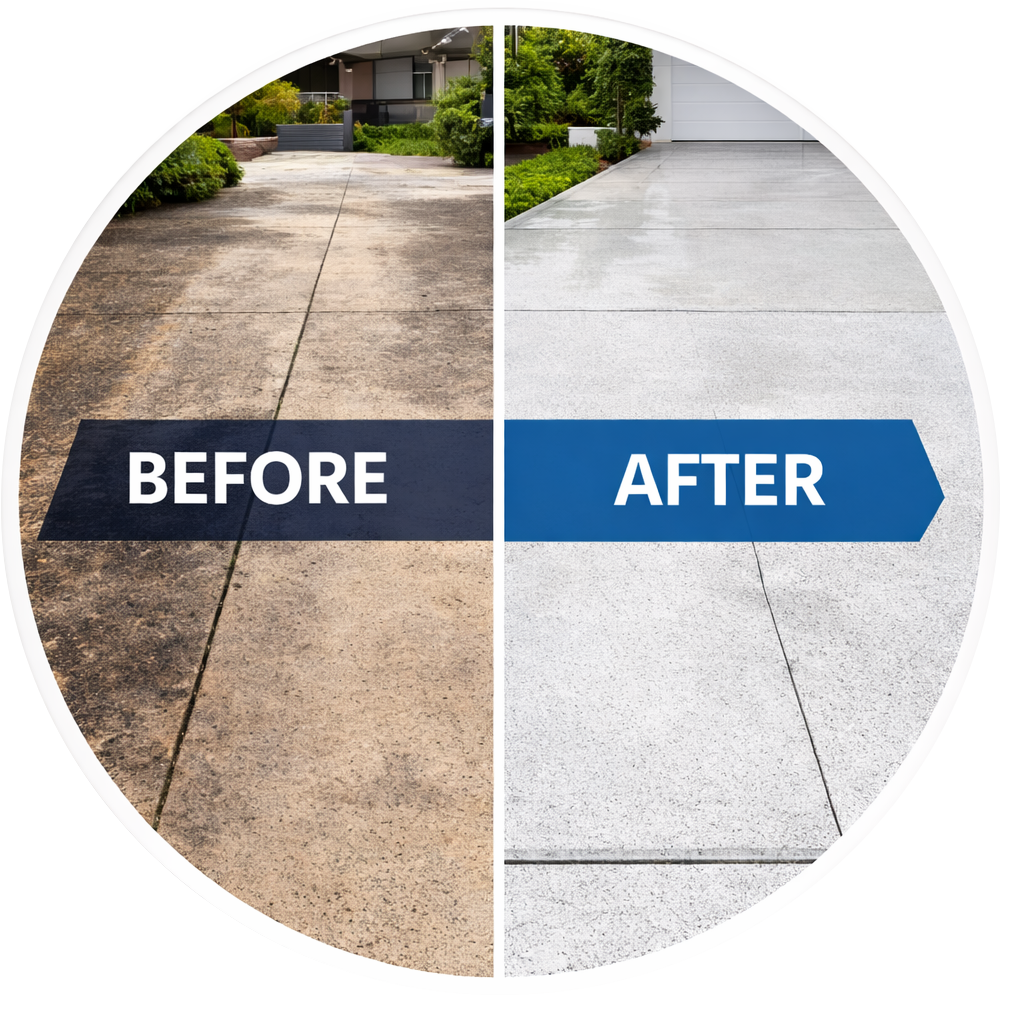
Pavers can often be restored with the right cleaning method, even when stains appear deeply set into the surface. Understanding how to clean stained pavers properly helps prevent surface damage, uneven colouring, and long-term wear caused by harsh chemicals or incorrect pressure washing.
Different stains require different treatments depending on the paver material and stain type. This guide explains safe cleaning methods, common mistakes, and how to keep outdoor surfaces cleaner for longer. For professional pressure washing and exterior surface restoration services across Sydney, property owners can arrange expert assistance.
Key Takeaways
- Oil, mould, rust, and tyre marks require different cleaning methods
- Excessive pressure can damage pavers and joints
- Sealed pavers are easier to maintain
- Regular maintenance helps reduce future staining
What Causes Stained Concrete Pavers?
Outdoor pavers absorb moisture, dirt, oil, and organic debris over time. This can cause visible staining and surface discolouration, especially on lighter coloured pavers.
Common causes include:
- Oil and grease leaks
- Rust from furniture or irrigation systems
- Mould and algae growth
- Leaf stains and dirt buildup
- Tyre marks
Common Mistakes When Cleaning Stained Pavers
Many people use excessive pressure or strong chemicals when trying to clean stained pavers. This can damage surface finishes, weaken paver joints, and leave permanent marks.
Using bleach incorrectly is another common issue. While it may lighten stains temporarily, it can also affect surrounding plants and surface colouring if not rinsed properly.
Professional cleaners adjust pressure levels and cleaning products based on the paver material and stain type.
Why Some Stained Concrete Pavers Are Harder to Clean
Concrete pavers are porous, which means oil, mould, rust, and dirt can soak below the surface if left untreated.
In some cases, it may develop permanent discolouration after prolonged exposure to contaminants. Sealing pavers after cleaning helps reduce moisture absorption and future staining.
How to Clean Stained Pavers Safely
The safest cleaning method depends on the stain type and paver material. Starting with less aggressive cleaning methods usually delivers better long-term results.
Step One: Remove Loose Dirt and Debris
Sweep the area before applying water or cleaning products. Pay attention to:
- Corners and paver joints
- Drainage areas
- Moss buildup between pavers
Step Two: Identify the Stain Type
Different stains require different treatments.
| Stain Type | Recommended Cleaning Method |
| Oil and grease | Degreaser and pressure washing |
| Rust | Rust remover suitable for pavers |
| Mould and algae | Soft washing treatment |
| Organic stains | Mild detergent and scrubbing |
| Tyre marks | Surface cleaner and pressure washing |
Step Three: Apply the Correct Cleaning Solution
Always test cleaning products on a small, hidden section first. Some chemicals can permanently discolour pavers.
For mild stains:
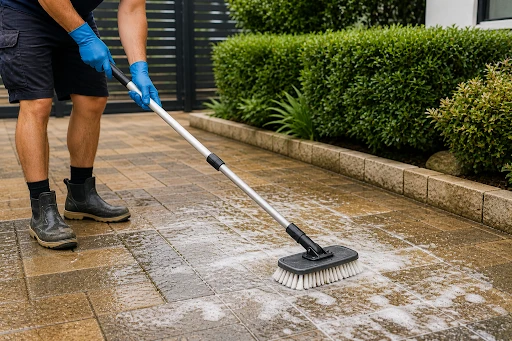
- Mix warm water with mild detergent
- Scrub gently with a stiff brush
- Rinse thoroughly with clean water
Heavier stains may require specialised products or professional treatment.
Step Four: Use Pressure Washing Carefully
Pressure washing can effectively clean stained pavers, but excessive pressure may damage joints and surface finishes.
A professional driveway cleaning service often uses rotary surface cleaners that distribute pressure evenly across outdoor surfaces.
For safer cleaning:
- Use moderate pressure only
- Keep the nozzle moving
- Avoid spraying directly into joints
Expert Tip for Cleaning Stained Pavers
Allowing cleaning products enough dwell time before rinsing usually improves stain removal and reduces the need for excessive pressure.
Testing cleaning products on a small hidden area first can also help prevent surface discolouration or damage.
How to Remove Oil Stains From Pavers
Oil stains are one of the most common outdoor paver problems. Fresh spills are easier to remove than older stains that have penetrated deeper into the surface.
Fresh Oil Stains
- Cover the spill with absorbent material such as cat litter
- Leave it for several hours
- Apply degreaser
- Scrub and rinse thoroughly
Older Oil Stains
Older stains may require repeated treatment because oil can penetrate porous materials over time.
Professional pressure washing combined with commercial degreasers can often improve the appearance significantly.
How to Remove Mould and Algae From Pavers
Mould, algae, and moss usually develop in damp outdoor areas with limited airflow.
Common signs include:
- Green or black patches
- Slippery surfaces
- Dark moisture stains
Soft washing is often safer than high-pressure washing because it treats the biological growth rather than only removing surface buildup.
How to Remove Rust Stains From Pavers
Rust stains often come from metal furniture, tools, irrigation systems, or fertilisers.
Acid-based rust removers may help remove stains, but incorrect use can damage some paver finishes.
Important precautions include:
- Wear gloves and eye protection
- Rinse immediately after treatment
- Avoid leaving acidic cleaners sitting too long
Should You Seal Pavers After Cleaning?
Sealing pavers after cleaning helps reduce future staining and makes maintenance easier.
Benefits include:
- Easier cleaning
- Reduced mould growth
- Better colour retention
- Improved surface appearance
Pavers should only be sealed once the surface is fully clean and dry.
When Professional Paver Cleaning Is the Better Option
Deep stains and large affected areas often require commercial cleaning equipment and specialised treatments.
Professional cleaning may be recommended when:
- DIY cleaning has not improved results
- Outdoor areas are slippery
- Pavers are fragile or ageing
- The property is being prepared for sale
Professional cleaners understand how different materials react to pressure washing and cleaning products.
How to Prevent Paver Stains in the Future
Preventing stains is usually easier and more affordable than restoring heavily affected surfaces later.
Simple maintenance strategies include:
- Sweep regularly
- Remove spills quickly
- Improve drainage
- Seal surfaces periodically
- Schedule routine pressure washing
Restore the Appearance of Your Outdoor Pavers Safely
Understanding how to clean stained pavers properly helps improve the appearance of driveways, patios, and outdoor entertaining areas while protecting surfaces from long-term damage. Using the right cleaning methods, treating stains early, and maintaining pavers regularly can help preserve surface condition and reduce costly restoration work later.
For professional pressure washing, soft washing, and exterior surface restoration across Sydney, reach out to Elite Property Northern Beaches through the Contact Us page, call 0416 007 745, or email admin@elitepropertynorthernbeaches.com.au to arrange a tailored cleaning solution for your paver and exterior surfaces.