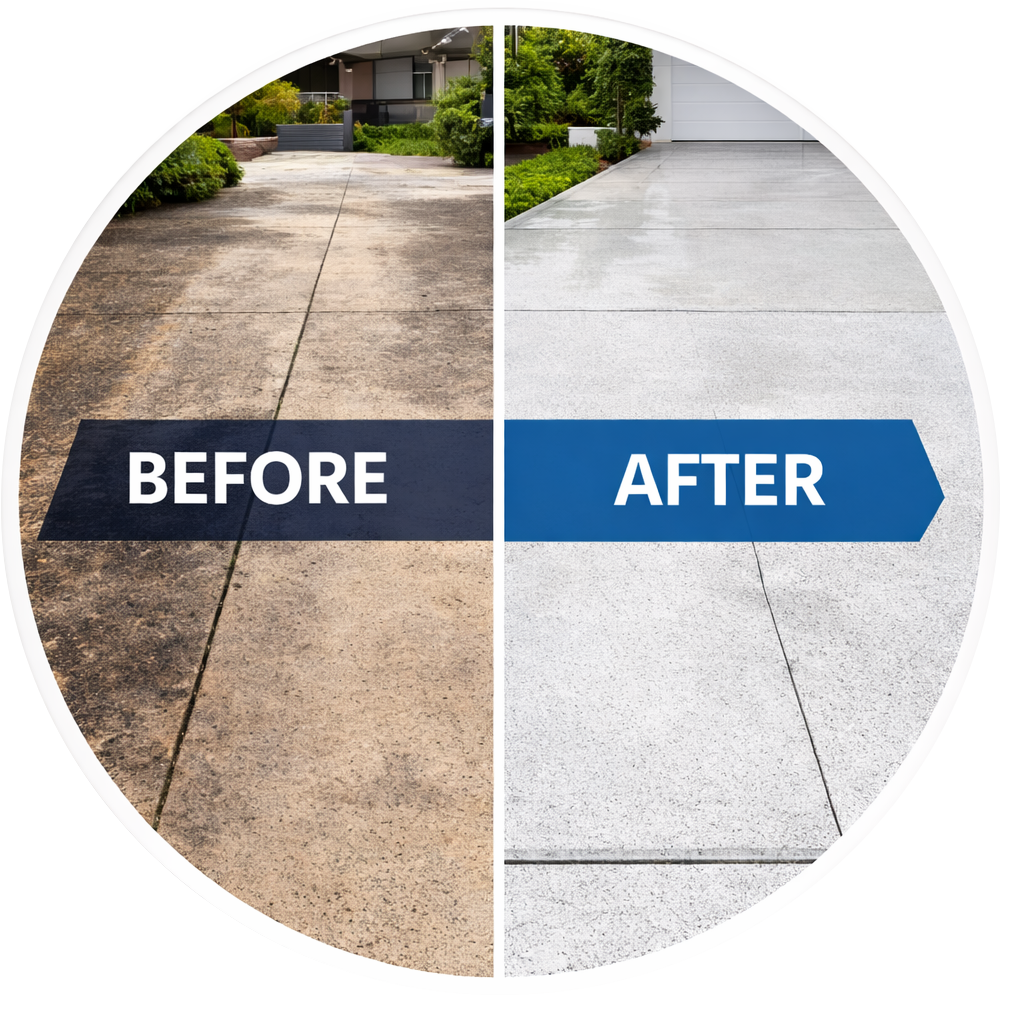
Keeping a concrete driveway clean helps protect the surface, improve street appeal, and reduce staining caused by dirt, mould, tyre marks, and oil buildup. Understanding how to clean a concrete driveway properly is important to avoid permanently damaging it caused by incorrect water pressure settings or applying harsh chemicals.
Many homeowners attempt to pressure clean driveway surfaces without understanding proper pressure settings or cleaning techniques. This guide explains safe cleaning methods, common cleaning mistakes to avoid, and when professional cleaning may be necessary. For professional driveway cleaning and surface restoration, using the correct equipment is essential for protecting concrete surfaces.
Key Takeaways
- Use the correct pressure settings to avoid surface damage
- Different stains require different cleaning methods
- Sealed concrete needs gentler cleaning techniques
- Heavy mould and oil stains may require professional treatment
- Regular cleaning helps reduce long-term surface deterioration
Common Causes of Concrete Driveway Stains
Concrete naturally absorbs moisture, dirt, oils, and contaminants over time. In Sydney and the Northern Beaches, coastal moisture and shaded areas often increase mould and algae buildup.
Common stains include:
- Tyre marks
- Oil and grease leaks
- Mould and algae
- Rust stains
- Leaf stains
According to the Australian Bureau of Statistics, regular property maintenance can help reduce long-term deterioration caused by environmental exposure and moisture buildup.
Best Way to Clean Concrete Driveway Surfaces
The best way to clean concrete driveway surfaces depends on the condition of the concrete and the type of staining present. Using excessive pressure or harsh chemicals may permanently damage the surface.
Inspect and Prepare the Surface
Before cleaning, inspect the driveway for:
- Cracks or weak areas
- Existing sealant coatings
- Deep oil stains
- Mould or moss growth
Sweep away loose dirt and debris before applying water or cleaning products.
Pre-Treat Stains First
Different stains require different cleaning methods.
| Common Stain | Recommended Cleaning Method |
| Oil stains | Concrete degreaser |
| Rust stains | Rust remover for concrete |
| Mould and algae | Soft wash treatment |
| Tyre marks | Mild detergent and surface cleaner |
Allow cleaning products to sit for several minutes before rinsing.
Use the Right Pressure Washer
Most residential driveway cleaning jobs use pressure washers between 2500 and 3500 PSI. Higher pressure should only be used on heavily stained surfaces.
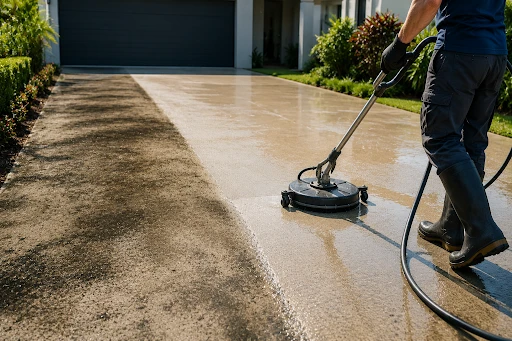
Professional surface cleaner attachments usually produce more even cleaning results than spray wands alone.
How to Pressure Clean Driveway Surfaces Properly
A driveway pressure clean can safely remove dirt, mould, and stains when performed correctly. Incorrect pressure settings may leave striping, etching, or surface damage.
To clean safely:
- Start at the highest point
- Work in sections
- Keep the nozzle moving continuously
- Use overlapping passes
- Rinse thoroughly after cleaning
Protect nearby garden beds, painted walls, timber surfaces, and windows during cleaning. For delicate exterior surfaces, soft washing services may be a safer option.
Common Mistakes That Damage Concrete Driveways
Many driveway cleaning problems happen because of poor technique or unsuitable products.
Using Excessive Pressure
Too much pressure can remove the top layer of concrete and expose aggregate unevenly.
Holding the Nozzle Too Close
Holding the spray nozzle too close may leave permanent etching marks. Keeping a safe distance helps distribute pressure more evenly.
Using Harsh Chemicals
Some acid cleaners weaken concrete and may damage nearby surfaces. Concrete safe detergents and oxygen-based cleaners are safer alternatives.
Ignoring Sealed Concrete Requirements
Sealed driveways require gentler cleaning methods. Aggressive pressure washing may strip protective sealants prematurely.
When DIY Driveway Cleaning May Not Work
Some driveway problems require professional equipment and experience.
Deep Oil and Grease Stains
Oil stains that have soaked into concrete may require commercial-grade degreasers and repeated treatment.
Heavy Mould and Moss Growth
Mould can become slippery and hazardous, especially in shaded areas. Professional cleaning may combine pressure washing with specialised treatments. Heavy mould growth on nearby surfaces may also require professional house washing services.
Older or Uneven Concrete
Older or textured driveways are harder to clean evenly using household equipment. Incorrect pressure washing may accelerate surface deterioration.
How Often Should You Clean a Concrete Driveway?
Most residential driveways benefit from cleaning every 12 to 18 months. However, cleaning frequency depends on traffic levels, moisture exposure, tree coverage, and staining.
More frequent cleaning may be necessary for driveways exposed to:
- Coastal moisture
- Constant shade
- Heavy vehicle use
- Frequent leaf buildup
- Ongoing mould growth
Routine maintenance helps reduce long-term surface wear and keeps cleaning more manageable.
Signs It Is Time to Call Professionals
DIY cleaning may not always provide safe or consistent results.
Consider professional cleaning if:
- Stains keep returning
- The concrete looks patchy after cleaning
- Mould becomes slippery
- DIY pressure washing leaves streaks or lines
- The driveway has not been cleaned for years
Professional pressure washing services can restore heavily stained surfaces while reducing the risk of unnecessary damage.
Pressure Clean Driveway Cost in Sydney
Pressure clean driveway cost depends on:
- Driveway size
- Surface condition
- Stain severity
- Access limitations
- Sealing requirements
Additional services such as oil stain removal, mould treatment, and concrete sealing, may increase pricing. Professional cleaning may help reduce long-term repair costs caused by incorrect DIY cleaning.
Protect Your Concrete Driveway Without Surface Damage
Understanding how to clean a concrete driveway properly helps reduce staining, protect the surface, and prevent unnecessary damage caused by incorrect pressure washing methods or harsh chemicals.
While basic cleaning can be managed with the right equipment, older or heavily stained driveways often require professional treatment for a safer and more consistent results. For professional pressure washing and exterior cleaning services, reach out to Elite Property Northern Beaches through the Contact Us page, call 0416 007 745, or email admin@elitepropertynorthernbeaches.com.au to arrange a tailored cleaning solution for your driveway and exterior surfaces.