Knowing how long after sealing a driveway you can drive on it can help protect the newly applied sealer and prevent early damage. The recommended waiting time depends on the type of sealer, weather conditions and the manufacturer’s curing instructions. Some fast-curing products may allow light vehicle traffic after 24 hours, while other sealers may require 72 hours, five days or even seven days in cooler conditions.
Allowing enough time for the sealer to cure helps reduce the risk of tyre marks, scuffing and uneven wear. Proper driveway sealing should also include suitable surface preparation, the right sealer for the surface and clear aftercare instructions for walking, parking and normal vehicle use.
Key Takeaways
- Fast-curing polyaspartic systems may be ready for light vehicles after about 24 hours.
- Some polyurethane systems require at least 72 hours.
- Water-based epoxy products may require about 96 hours.
- Many acrylic concrete sealers require at least five days, or longer in cool weather.
- New concrete curing and sealer curing are separate processes.
How Long After Sealing a Driveway Can I Drive on It?
The waiting time before driving on a sealed driveway can range from about 24 hours to seven days, depending on the sealer used, weather conditions and how quickly the coating cures. A surface may feel dry to the touch while the sealer underneath is still curing, so it is important to follow the manufacturer’s instructions and your contractor’s recommended waiting time.
As a general guide:
| Sealer System | Typical Foot Traffic | Typical Light Vehicle Traffic |
| Fast-curing polyaspartic | 1 to 2.5 hours | About 24 hours |
| Polyurethane | About 48 hours | About 72 hours |
| Water-based epoxy | About 24 hours | About 96 hours |
| General-purpose acrylic | About 24 hours | At least 5 days |
These timeframes are only a guide. Cooler temperatures, high humidity, limited airflow or thicker applications can extend curing time, so the product instructions should always take priority.
What Affects Driveway Sealer Curing Time?
Several factors can affect how quickly driveway sealer cures after application. The product type, weather conditions, surface temperature, moisture level, porosity and expected traffic should all be considered before confirming when the driveway is ready for use.
- Product type: Chemistry creates the biggest timing difference.
- Temperature and humidity: Cool or moist conditions can slow curing.
- Water exposure: Early rain or sprinklers may mark the finish.
- Coating thickness: Pooled or heavy areas often stay soft longer.
- Shade and vehicle load: Covered areas cure slowly, while heavy vehicles add more stress.
Product technical sheets often note that weather conditions and coating thickness can affect curing time. Some products also have minimum and maximum application temperatures because extreme conditions may affect drying and overall performance.
Concrete Driveway Curing Time Chart: New Slab Versus Sealer
A newly poured concrete driveway and a newly sealed existing one require different curing periods.
- Concrete driveway curing time refers to the period needed for the concrete to gain strength through cement hydration.
- Sealer curing time refers to how long the applied coating or penetrating sealer needs before the surface is ready for foot or vehicle traffic.
| Stage | New concrete driveway | Existing driveway after sealing |
| First day | Protect from traffic | Keep dry and closed as directed |
| 24 to 48 hours | Walking may be approved | Some products allow foot traffic |
| 3 to 7 days | Vehicle timing needs contractor approval | Many sealers allow vehicles within this range |
| Around 28 days | Common strength development reference | Not a standard sealer waiting period |
Why Concrete Driveway Cure Time Is Different
Fresh concrete hardens through hydration, which is a reaction between cement and water that develops strength over time. A sealer applied to cured concrete instead needs to dry, penetrate or chemically react according to its formulation, so a new slab timetable should not be used to judge a resealed driveway.
The difference matters because a driveway may involve two waiting periods. New concrete may need to cure before sealing, and the applied sealer must then complete its own product-specific curing period before vehicles return.
Step by Step: Check Before You Drive
Do not test a young coating by rolling a tyre onto it. Confirm the product, final coat time, recent weather and condition of the whole surface first, then reopen the driveway without stationary steering, heavy parking or repeated traffic during the early service period.
- Identify the exact product. Obtain the brand name, product name and technical data sheet.
- Record the final coat time. Count curing from completion of the last coat, not from when cleaning or preparation began.
- Review the weather. Consider rain, humidity, cool nights and changes in surface temperature.
- Check slower sections. Inspect shaded, low-lying, and more heavily coated areas.
- Ask for approval. Obtain confirmation from the applicator before allowing vehicle access.
- Reopen carefully. Drive straight and avoid turning the steering wheel while the vehicle is stationary.
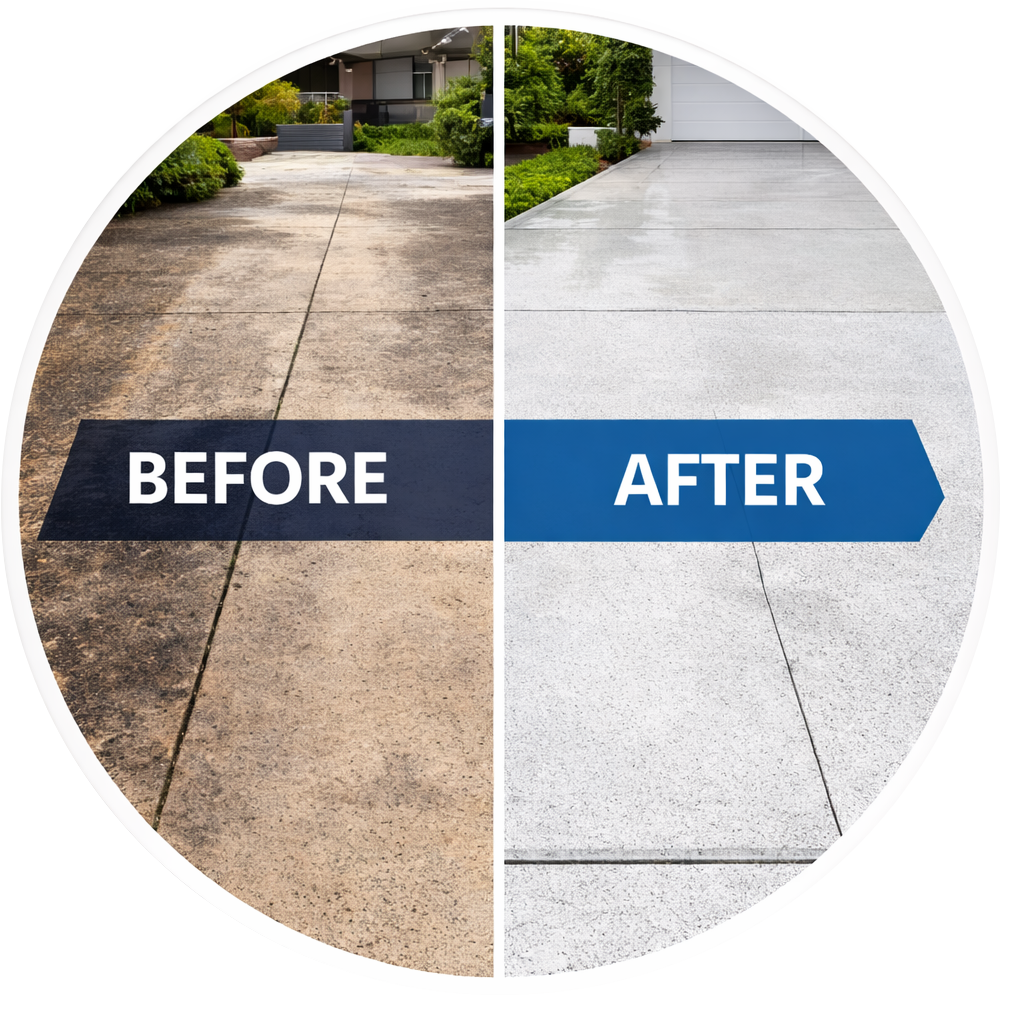
Reliable driveway pressure cleaning removes grime, algae and loose material before concrete sealing services match the coating and application method to the surface. Proper preparation helps the product bond evenly and reduces the risk of visible defects.
What Happens If You Drive Too Soon?
Premature vehicle use can affect appearance and coating performance. Tyres apply weight, heat and twisting force, especially when the steering wheel turns while the car is stopped, so an uncured finish may be marked or disturbed before reaching its intended performance.
Possible problems include:
- Tyre marks or scuffs
- Dull or patchy areas
- Dirt pressed into soft coating
- Peeling or uneven early wear
- Marks where vehicles turn near the garage
- Reduced coating adhesion in affected sections
Do not immediately add another layer of sealer. First determine whether the problem is contamination, trapped moisture, coating failure or concrete discolouration before choosing cleaning, stripping, repair or resealing.
How Do You Protect a Sealed Driveway?
Good aftercare reduces staining, organic growth and unnecessary coating wear. Once normal use resumes, remove contamination promptly and use cleaning products and pressure levels compatible with the sealer instead of assuming every sealed surface can withstand aggressive cleaning.
- Sweep leaves, sand and grit regularly.
- Clean fresh oil before it penetrates or spreads.
- Avoid dragging metal items across the surface.
- Treat algae before it covers larger shaded areas.
- Follow the sealer manufacturer’s maintenance instructions.
- Arrange an inspection if gloss, colour or water resistance becomes uneven.
Protect the Finish With the Correct Cure Time
When deciding how long after sealing a driveway you can drive on it, use the product instructions and site-specific advice rather than one fixed estimate. A rapid system may allow traffic after 24 hours, while another sealer may need three, four, five or seven days.
For dependable driveway cleaning, sealing and aftercare guidance, contact Elite Property Northern Beaches on 0416 007 745 or email admin@elitepropertynorthernbeaches.com.au. The company provides exterior cleaning and surface care for residential and commercial properties across Sydney.