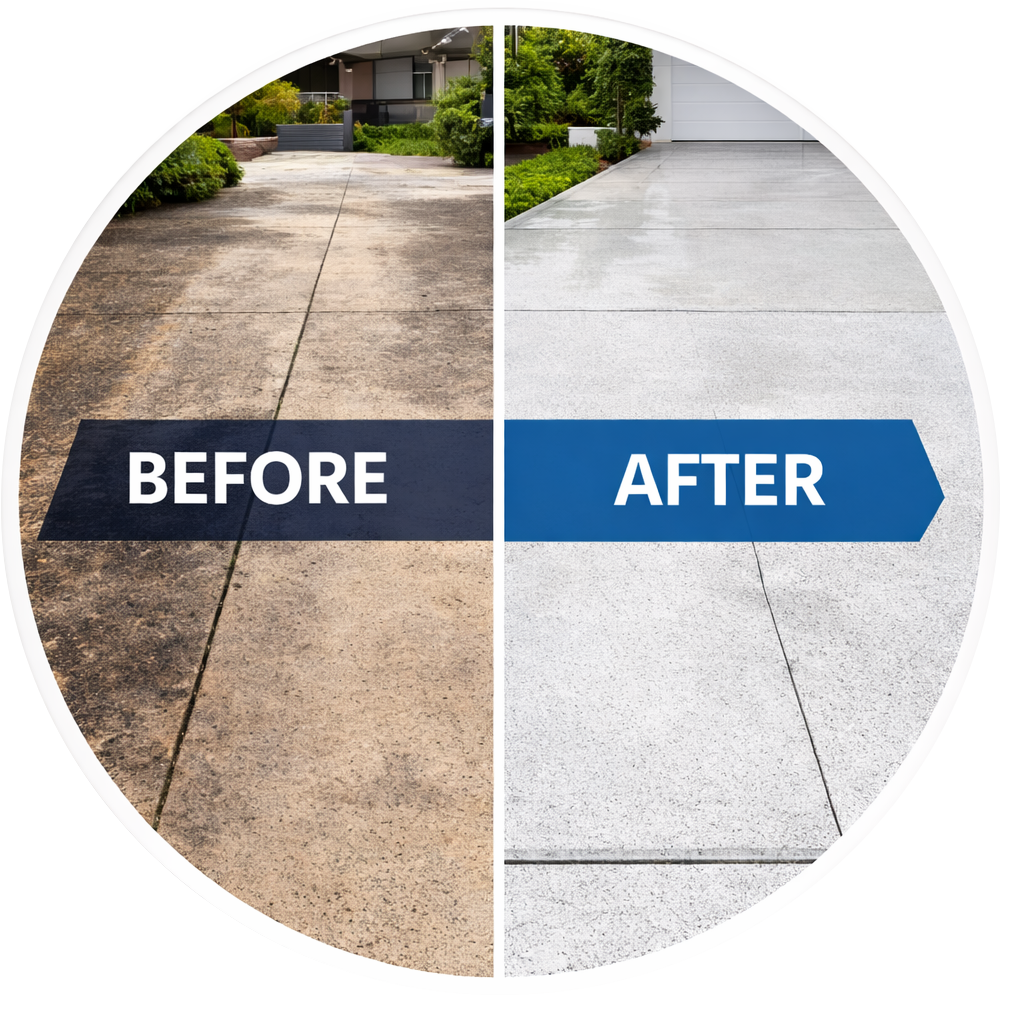
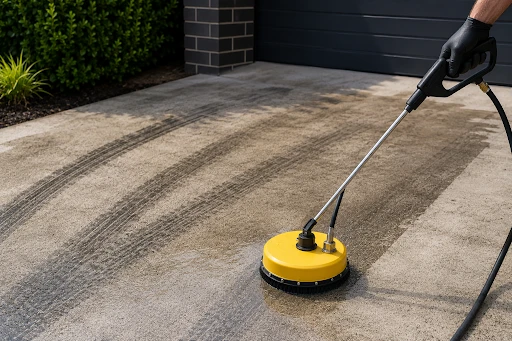
Tyre marks on concrete are usually removed using a combination of degreasers, pressure washing, and surface-appropriate cleaning methods. The sooner you clean the marks, the easier they are to remove without damaging the driveway surface.
Understanding how to get tyre marks off concrete properly helps prevent permanent staining, restore driveway appearance, and protect sealed surfaces from unnecessary wear. Different concrete finishes require different cleaning methods, so using the correct approach is important for long-term surface care.
Key Takeaways
- Fresh tyre marks are easier to remove than older embedded stains
- Pressure washing works best with proper pre-treatment
- Harsh chemicals can damage sealed or decorative concrete
- Oil residue can make tyre stains harder to remove
- Regular cleaning helps prevent permanent driveway staining
Why Do Some Concrete Driveways Develop More Tyre Marks?
Tyre marks form when heated rubber transfers onto the concrete surface through friction, braking, or turning movements. Dirt, oil, and moisture can trap the residue deeper into porous concrete, making stains harder to remove over time.
Driveways often develop black streaks where vehicles regularly reverse or turn sharply. Hot weather can increase tyre staining because softened rubber transfers more easily onto the concrete surface.
Surface Factors That Increase Tyre Staining
- Unsealed concrete absorbs residue faster
- Exposed aggregate traps dirt and rubber between stones
- Older driveways contain more surface pores and cracks
Environmental Factors That Increase Tyre Staining
- Coastal moisture holds contaminants on the surface longer
- Heavy vehicles create stronger friction and heat
What Most People Get Wrong About Tyre Marks
Many people assume tyre marks are only surface dirt, but rubber residue often bonds with concrete pores. Using steel brushes or harsh acids can damage the driveway without fully removing the stain.
Another common mistake is leaving tyre marks untreated for long periods. Older stains usually require stronger detergents and multiple cleaning treatments.
How to Get Tyre Marks Off Concrete Safely
Removing tyre marks safely depends on the concrete finish, stain age, and whether the driveway is sealed. Starting with gentle cleaning methods helps reduce the risk of surface damage.
Step One: Sweep and Rinse the Surface
Remove loose dirt and debris before applying cleaning products. Lightly rinsing the area softens grime and prepares the concrete for treatment.
Step Two: Apply a Concrete Compatible Degreaser
Use a concrete safe cleaner or degreaser designed for rubber and oil removal. Let the cleaner sit for several minutes so it can break down the residue properly.
Step Three: Scrub the Affected Area
Use a stiff-bristle broom or deck brush to loosen tyre marks from the concrete surface. Softer brushes are usually safer for decorative or sealed concrete.
Step Four: Pressure Wash the Driveway
Pressure washing helps rinse away loosened rubber residue from the driveway surface. Professional cleaners often adjust pressure levels depending on the driveway’s condition.
For stubborn stains, combining pressure washing with concrete cleaning methods can restore the surface more effectively while protecting the concrete finish.
Step Five: Repeat if Necessary
Older tyre marks may require more than one treatment because rubber can penetrate deeply into porous concrete surfaces.
How to Remove Tyre Marks From Different Concrete Surfaces
Different concrete finishes require different cleaning methods because pressure levels and chemicals can affect surfaces differently.
Sealed Concrete
Sealed driveways require gentler cleaning products because harsh solvents can weaken the protective coating. Lower pressure washing settings are usually safer.
Exposed Aggregate Concrete
Exposed aggregate surfaces trap rubber and dirt between textured stones. Moderate pressure washing combined with surface cleaners often produces better results.
Decorative or Coloured Concrete
Decorative concrete may fade if strong chemicals are used incorrectly. Testing a small hidden section first can help prevent uneven discolouration.
Painted Concrete Surfaces
Painted concrete surfaces require lower pressure levels because excessive force can peel or weaken the paint coating.
Best Cleaning Products for Tyre Marks on Driveway Surfaces
Different cleaning products work better for different levels of staining. Choosing the correct cleaner improves results while reducing the risk of surface damage.
| Cleaning Product | Best For | Notes |
| Concrete degreaser | Fresh tyre marks | Safe for most driveways |
| Citrus-based cleaner | Light rubber stains | Lower chemical strength |
| Pressure washing detergent | Deep cleaning | Works well with pressure washers |
| Soft washing solution | Decorative concrete | Lower pressure application |
| Baking soda paste | Small marks | Mild household option |
Are Household Products Effective?
Household products can help remove light tyre marks, but they are usually less effective on older, embedded stains. Baking soda, warm water, and grease-cutting detergent may work for smaller surface marks.
Once cleaning products loosen the rubber residue, pressure washing can help remove the remaining buildup more effectively.
How to Clean Tyre Marks Off Concrete With Pressure Washing
Pressure washing is one of the most effective ways to remove tyre marks because it lifts embedded rubber residue from porous concrete surfaces. Proper technique is more important than excessive pressure.
Using too much pressure can etch the concrete or leave uneven cleaning lines across the driveway.
Best Practice for Pressure Washing Concrete
Professional cleaners usually:
- Pre-treat the surface
- Use controlled pressure settings
- Clean using overlapping passes
- Rinse thoroughly to prevent streaking
- Allow the surface to dry before reassessing
Cleaning in even passes helps prevent patchy results and improves the overall driveway appearance.
Mistakes to Avoid When Removing Tyre Marks From Concrete
Many driveway cleaning problems happen because unsuitable cleaning methods are used. Using the wrong products or equipment can damage the concrete without fully removing the tyre marks.
Common mistakes include:
- Using excessive pressure on decorative concrete
- Scrubbing with steel brushes that scratch the surface
- Skipping pre-treatment before pressure washing
- Using acidic cleaners on coloured concrete
- Leaving tyre marks untreated for long periods
Avoiding these mistakes helps protect the driveway while improving cleaning results.
Why Oil Makes Tyre Marks Harder to Remove
Oil residue can trap rubber particles against the concrete surface, making tyre stains darker and harder to remove. Degreasing before pressure washing usually improves cleaning results significantly.
This is especially important when learning how to clean tyre marks off concrete properly.
When Tyre Marks Become Permanent
Some tyre marks become difficult to remove because rubber and oils penetrate deeply into porous concrete over time. Heat exposure and repeated vehicle movement can worsen the staining.
Signs the Stain Is Deeply Embedded
- Dark shadows remain after cleaning
- Uneven patches appear across the surface
- Rubber residue returns after rainfall
- Rough surface texture becomes noticeable
- Previous cleaning attempts caused fading
Older driveways with worn sealing are often more vulnerable to permanent tyre staining.
Can Pressure Washing Remove Tyre Marks Without Damaging Concrete?
When suitable pressure settings are used, pressure washing is generally safe for most concrete surfaces. Delicate surfaces, such as decorative or newly sealed concrete, may require lower pressure or soft washing methods.
Professional cleaners often assess the driveway condition before selecting pressure settings because older or decorative concrete surfaces can be more sensitive to damage.
Surfaces That Need Extra Care
- Decorative concrete surfaces
- Older cracked driveways
- Newly sealed concrete surfaces
- Painted driveway finishes
In most cases, soft washing methods provide safer cleaning for delicate surfaces.
How Often Should You Remove Tyre Marks From Your Driveway?
Regular cleaning helps prevent rubber residue from becoming permanent. High-traffic driveways usually benefit from more frequent cleaning before stains build up heavily.
| Driveway Usage | Suggested Cleaning |
| Standard residential | Every 6 to 12 months |
| High-traffic household | Every 3 to 6 months |
| Commercial properties | Every 1 to 3 months |
| Coastal properties | More frequent due to moisture and salt |
Routine cleaning also helps maintain the overall appearance and value of the property.
Preventing Future Tyre Marks on Concrete
Preventative maintenance helps reduce the risk of permanent staining and keeps driveways clean longer. Sealed surfaces are generally easier to maintain as rubber residue stays closer to the surface instead of soaking into the concrete pores.
Ways to Reduce Future Tyre Marks
- Seal the driveway regularly
- Clean oil spills quickly
- Avoid harsh turning movements when parked
- Schedule routine pressure cleaning
- Remove surface grime before it traps rubber residue
Regular pressure washing can also help maintain a cleaner driveway appearance throughout the year.
Professional Cleaning vs DIY Methods
DIY cleaning may work for light tyre marks, while professional cleaning is usually more effective for older or widespread staining. Commercial equipment and specialised detergents can improve cleaning consistency and surface safety.
| DIY Cleaning | Professional Cleaning |
| Suitable for small stains | Better for deep stains |
| Lower upfront cost | Stronger equipment |
| Limited pressure capability | Surface-specific cleaning |
| Time consuming | Faster results |
Professional cleaning may also help identify mould buildup, worn sealing, or surface deterioration early.
Keep Your Concrete Driveway Cleaner for Longer
Understanding how to get tyre marks off concrete properly helps restore driveway appearance while protecting the surface from unnecessary wear. Regular maintenance, safe cleaning products, and professional pressure washing when needed can help keep concrete surfaces cleaner, safer, and easier to maintain over the long term.
For stubborn tyre stains or heavily marked driveways, Elite Property Northern Beaches provides professional pressure washing and exterior cleaning services tailored to different concrete surfaces. Reach out through the Contact Us page, call 0416 007 745, or email admin@elitepropertynorthernbeaches.com.au to restore your driveway and keep your property looking cleaner year-round.