To answer how to remove algae from pool surrounds, clear debris, apply a suitable algae treatment, allow dwell time, then use controlled pressure washing to lift growth without damaging concrete, pavers, stone, grout, or coping. For large or slippery areas, pool surround cleaning helps restore a cleaner surface while reducing algae and built-up grime.
Algae around pools should be handled early because damp, shaded, and salt-exposed surfaces can become stained and slippery. The best result comes from treatment, controlled washing, and better drainage.
Key Takeaways
- Algae often grows because of shade, moisture, leaves, sunscreen residue, and poor drainage.
- Pressure washing works best after pre-treatment, not as a force-only clean.
- Concrete, pavers, sandstone, tiles, and sealed surfaces need different pressure levels.
- Narrow jets can etch concrete, loosen joint sand, or mark soft stone.
- Regular sweeping, rinsing, drainage checks, and sealing can slow regrowth.
Why Algae Builds Up Around Pool Surrounds
Algae grows around pool surrounds when moisture, shade, organic matter, and rough surfaces combine. Pool splash, rain, sunscreen residue, soil, leaves, and salt air can settle into pores, joints, drains, and textured areas.
This is different from algae inside the pool water. A pool may look clean while surrounding pavers, coping, concrete, or stone develop green, black, or slippery patches. Common causes include overhanging trees, poor drainage, soil in joints, worn sealer, and shaded corners.
Common Mistakes That Make Pool Algae Return
Most people get pool algae cleaning wrong by relying on pressure alone. High pressure may remove the green colour, but residue can stay inside joints, pores, drains, and shaded borders. Another mistake is cleaning only the visible patch. If the wet edge beside a garden bed or drain is ignored, algae can spread back within weeks.
How To Remove Algae From Pool Surrounds Quickly
The safest answer to how to remove algae from pool surrounds quickly is to treat the growth first, then rinse it away with controlled pressure. This works better than blasting because algae can sit inside pores, grout lines, joints, and shaded edges.
Searches for how to get rid of algae in the pool quickly often focus on the pool water, but surrounds need a different method. Poolside surfaces face foot traffic, furniture, coping, drains, and garden runoff, so pressure and treatment choice matter.
Use this quick process:
- Clear furniture, pots, toys, and pool equipment.
- Sweep leaves, soil, and loose debris.
- Apply a suitable algae or mould treatment.
- Allow dwell time so growth loosens.
- Pressure wash with controlled force.
- Rinse drains, joints, coping, and low spots.
Expert best practice: Let the treatment work before pressure washing. When the cleaner breaks down growth first, less pressure is needed.
Step-by-Step Pressure Washing Process for Pool Surrounds
A proper pressure washing process starts with inspection and ends with prevention. This helps avoid patchy results, surface damage, runoff problems, and quick regrowth.
Step 1: Inspect the Pool Surround
Check for cracked grout, loose pavers, worn sealer, soft sandstone, painted edges, glass fencing, nearby plants, and drainage points. These details decide the safer method.
Step 2: Clear Loose Debris
Remove leaves, soil, mulch, dust, and loose organic matter before wetting the area. Debris left in joints or drains can settle back onto the cleaned surface.
Step 3: Apply the Right Pre-Treatment
Apply a cleaner suited to the surface and growth level. Heavy algae may need more dwell time, while delicate stone may need a gentler product. Avoid mixing chemicals and manage runoff.
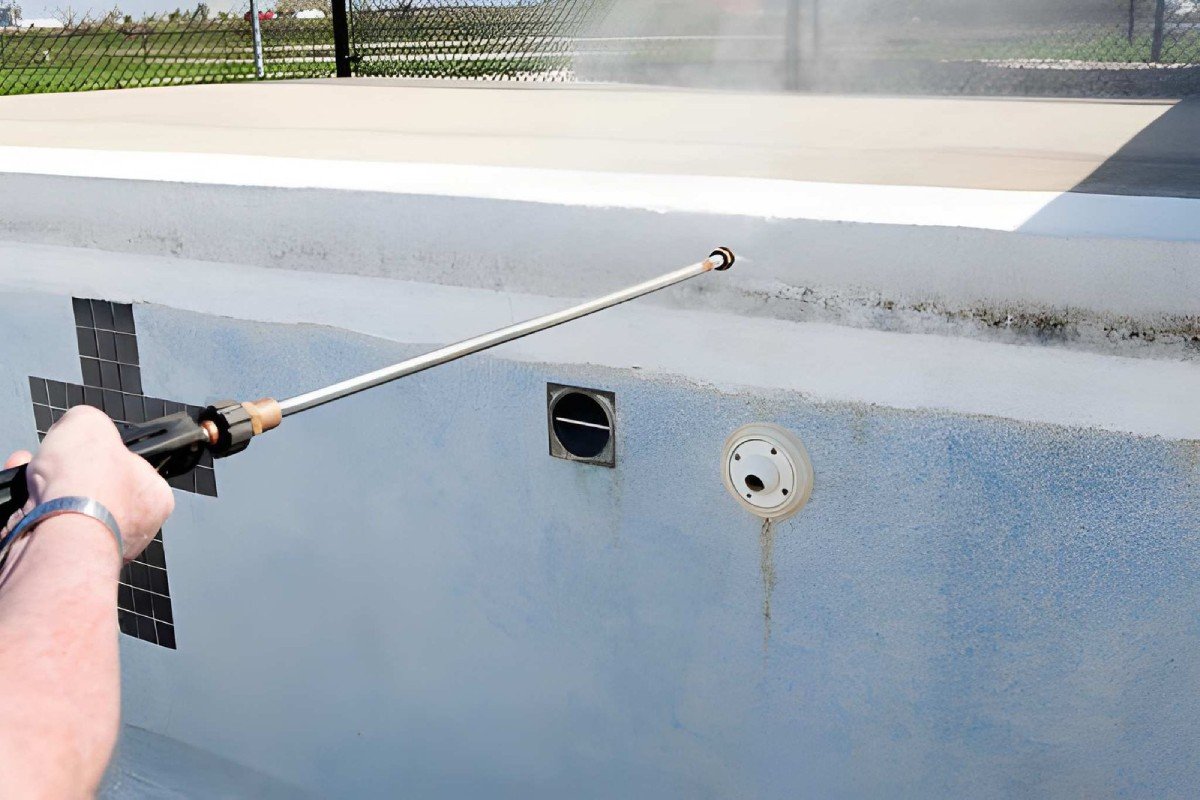
Step 4: Pressure Wash With Control
Use a wide fan, surface cleaner, or controlled rinse rather than a narrow jet. Durable slabs affected by algae, dirt, and outdoor buildup often need concrete pressure cleaning matched to the surface condition.
Step 5: Rinse and Check Low Spots
Rinse drains, corners, coping edges, and shaded borders thoroughly. If water pools after cleaning, algae may return quickly, so drainage and airflow should be checked.
Pressure Washing Versus Soft Washing for Pool Surround Algae
Pressure washing suits durable surfaces, while soft washing suits delicate, painted, sealed, or porous areas that may be damaged by force. The right method depends on material, age, finish, and stain depth.
| Method | Best For | Main Benefit | Main Risk |
| Pressure washing | Concrete, hard pavers, durable stone | Removes algae and grime | Excess force can etch surfaces |
| Soft washing | Painted, sealed, porous surfaces | Treats growth with lower pressure | Needs correct product choice |
| Combined cleaning | Mixed pool surrounds | Balances treatment and rinsing | Requires surface assessment |
The key question is how to remove algae without damage. Soft washing is often safer near painted finishes, older coatings, and softer stone.
How To Treat Concrete, Pavers and Stone Around Pools
Concrete, pavers, and stone respond differently to algae removal. A method that works on broom-finished concrete may be too harsh for sandstone, old grout, or sealed paving.
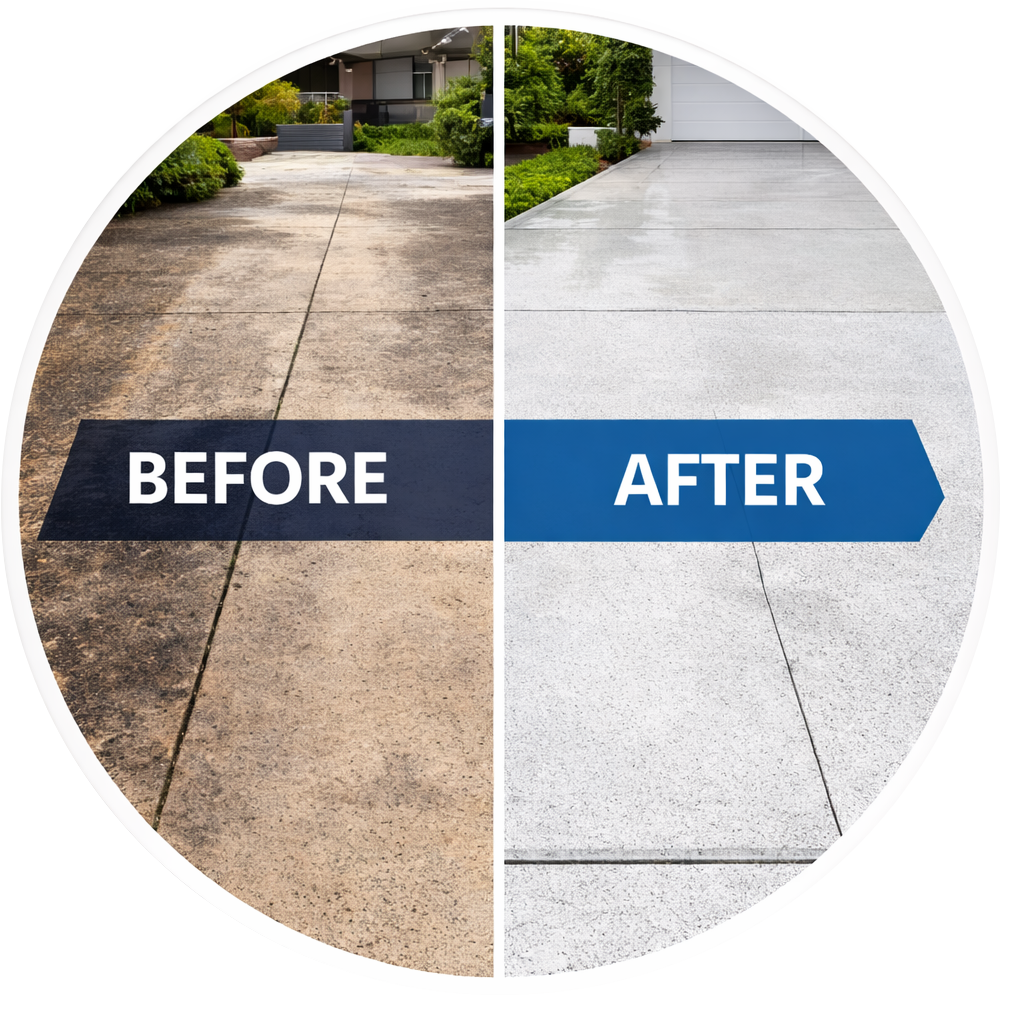
Concrete is usually durable, but a narrow pressure jet can still mark it. A surface cleaner or wide spray gives a more even result. For darker marks, concrete cleaning principles still apply around pool paths.
Pavers often hold algae in joints, gaps, drains, and low spots where soil and moisture collect. Stain-specific paver cleaning is useful when algae appears with rust, leaf marks, or black organic staining.
Sandstone and some natural stones need more care. Heavy pressure can open the surface, leave scars, or cause uneven colour. Gentle treatment and controlled rinsing are usually safer.
How To Keep Pool Surrounds Cleaner After Algae Removal
Knowing how to clean algae from pool surrounds is useful, but long-term results depend on maintenance. Algae is more likely to return when surfaces stay damp, shaded, dirty, or poorly drained.
To reduce regrowth:
- Sweep leaves and soil weekly during wet or windy periods.
- Rinse sunscreen residue and spills after heavy pool use.
- Trim plants that block sunlight and airflow.
- Keep drains, channels, and garden edges clear.
- Treat early green patches before they spread.
- Seal suitable pavers, concrete, or stone after cleaning.
When comparing how to get rid of pool algae on surfaces versus in water, the key difference is the method. Pool water needs chemical balancing and filtration, while pool surrounds need surface treatment, controlled rinsing, and moisture control.
Keep Your Pool Surround Clean, Clear and Ready for Use
Knowing how to remove algae from a pool starts with treating the surrounding surfaces properly, not just washing away the visible green patches. Algae can return quickly when moisture, shade, leaves, and poor drainage are left untreated, so the best result comes from surface assessment, suitable pre-treatment, controlled rinsing, and ongoing maintenance.
Elite Property Northern Beaches provides pressure washing, soft washing, surface cleaning, concrete cleaning, paver cleaning, and mould and moss removal for residential and commercial pool areas. If your pool surround is slippery, stained, or affected by recurring algae, call 0416 007 745 or email admin@elitepropertynorthernbeaches.com.au to request a quote.