
A seasonal home maintenance checklist for Sydney homeowners should prepare the property for summer storms, autumn leaf fall, winter moisture and spring cleaning. Regular checks, supported by suitable house washing, help identify blocked drainage, mould, algae and exterior wear before they become harder to manage.
The best approach combines simple homeowner inspections with surface-specific cleaning and licensed trade work when access, damage or safety risks place the task beyond routine maintenance.
Key Takeaways
- Check gutters, downpipes and drains before heavy rain.
- Treat moss, mould and algae before growth becomes extensive.
- Inspect coastal homes for salt residue, corrosion and staining.
- Match pressure and treatment methods to each surface.
- Refer roof, electrical, plumbing and structural repairs to licensed trades.
Seasonal Home Maintenance Checklist by Season
Sydney homes experience changing combinations of heat, storms, humidity, shade, tree debris and coastal salt. The table places the most important tasks in one schedule, with water flow, safe access and exterior condition given priority before cosmetic improvements.
| Season | Main risks | Priority tasks | Consider specialist help when |
| Summer | Heat, storms and holiday absences | Clear drains, secure outdoor items and inspect after storms | Roof materials move, or high areas need cleaning |
| Autumn | Leaves and heavier rain | Clear roof drainage and check downpipes | Gutters are high, difficult to access or repeatedly blocked |
| Winter | Dampness, mould, moss and algae | Find moisture sources and clean affected surfaces | Growth is widespread, or the surface is fragile |
| Spring | Grime, salt residue and outdoor preparation | Inspect walls, windows, paving and driveways | Large areas need controlled washing |
Summer: Prepare for Heat and Storms
Summer maintenance should protect drainage, outdoor fixtures and exposed surfaces before severe weather or time away. Complete inspections during cooler conditions, keep roof checks at ground level and address loose items before strong winds or heavy rain arrive.
- Clear stormwater grates and surface drains.
- Secure furniture, umbrellas and loose garden items.
- Check decks, stairs and pool surrounds for damage.
- Inspect gutters and visible roof edges after strong winds.
- Arrange a property check during longer holidays.
Autumn: Keep Gutters and Downpipes Clear
Leaves can compact inside gutters, valleys and downpipes, causing water to spill over roof edges or collect near walls. Arrange gutter cleaning when debris is visible, water overflows, plants appear in the gutter, or a downpipe seems slow.
Autumn priorities include:
- Clear accessible drains and grates.
- Check gutters from the ground for sagging or overflow marks.
- Confirm that downpipes discharge away from the building.
- Trim branches touching roofs, gutters or walls.
- Check window and door seals before cooler weather.
Winter: Control Moisture and Organic Growth
Winter shade and slower drying can encourage moss, mould and algae on walls, concrete, pavers, stone and paths. Cleaning visible growth is only part of the solution because leaking gutters, poor drainage or dense vegetation may continue to keep the area damp.
Check shaded access routes, walls beneath gutters, failed sealant and areas where water remains after rain. Advice on removing moss from concrete explains why excessive pressure can mark worn concrete or disturb nearby joints.
Best practice is to correct the moisture source before arranging repeated cleaning. Otherwise, growth is likely to return even when the surface initially looks clean.
Spring: Inspect and Refresh Exterior Surfaces
Spring is a practical time to assess winter staining and prepare outdoor areas for warmer weather. Review walls, windows, decks, fences, paths and driveways before gardening, entertaining and other outdoor activities increase.
- Wash accessible windows, screens and frames.
- Check painted walls for mould, chalking or peeling.
- Look for salt residue on coastal-facing surfaces.
- Inspect concrete and paving for cracks or movement.
- Review timber coatings and exposed fixings.
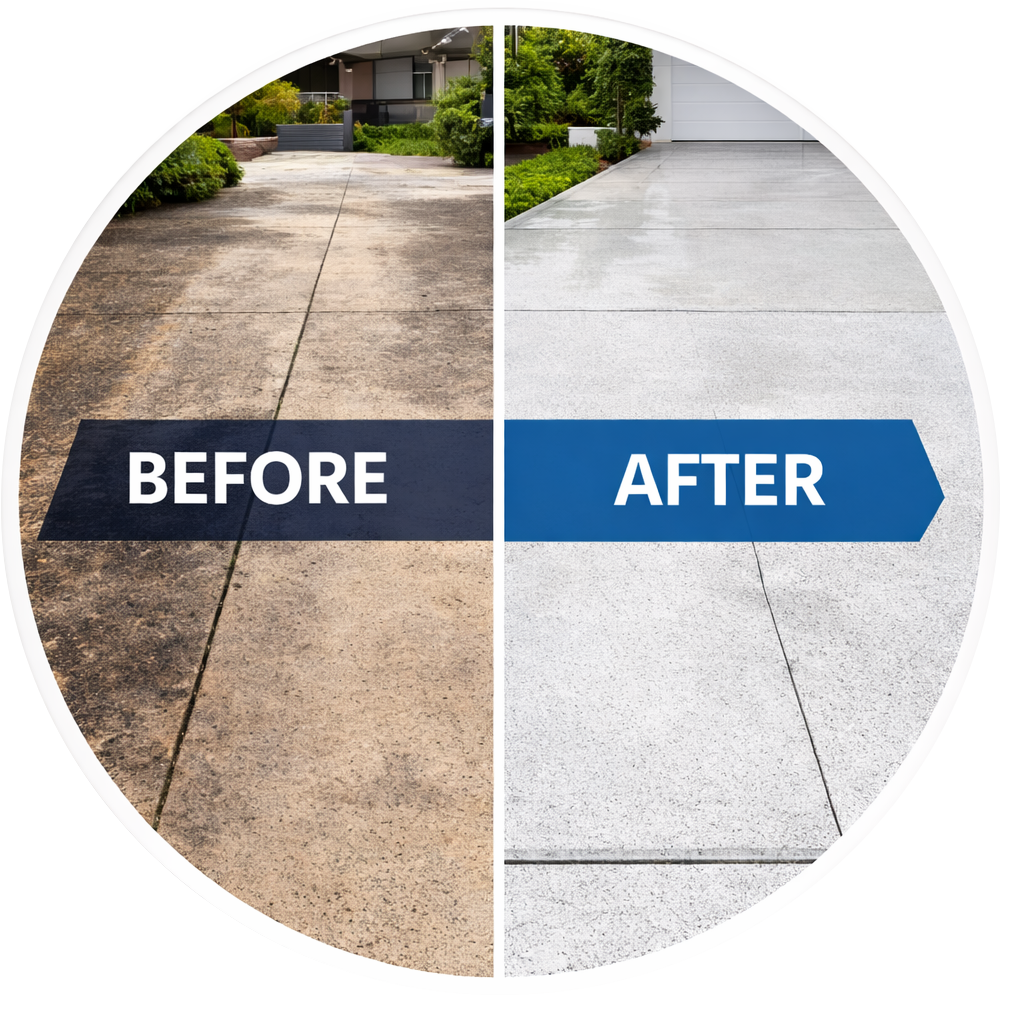
Consider driveway pressure cleaning when sweeping and ordinary rinsing cannot remove embedded grime, algae or tyre residue. The correct method for cleaning a concrete driveway without damage depends on whether the surface is sealed, worn, cracked or heavily stained.
How to Complete a Comprehensive Home Maintenance Checklist
Divide the property into clear zones and record what was inspected, what changed and what action is required. Photos and dates make recurring stains, cracks and drainage problems easier to track while helping separate routine cleaning from urgent repair work.
- Start with water flow. Check gutters, downpipes, stormwater grates and low areas where water collects.
- Review the roofline. Use binoculars or camera zoom to look for moved tiles, rust, debris or uneven gutter sections.
- Inspect exterior walls. Record mould, peeling paint, cracks, salt residue and marks beneath gutters or windows.
- Check access surfaces. Look for loose steps, raised pavers, pooling water and slippery organic growth.
- Review windows and fixtures. Check sealant, screens, frames, lights and metal fittings for damage or corrosion.
- Inspect outdoor living areas. Review decks, patios, fences, retaining walls, and pool surrounds.
- Prioritise each finding. Classify it as routine cleaning, specialist cleaning, licensed trade repair or urgent safety work.
How Often Should Home Maintenance Be Completed?
A home maintenance checklist is easier to follow when tasks are grouped by frequency. Weekly observations should remain brief, while seasonal reviews should examine drainage, exterior surfaces and weather-related changes across the property.
| Frequency | Suggested checks |
| Weekly | Sweep entries, clear debris, remove fresh spills and look for visible leaks |
| Monthly | Test smoke alarms and inspect frequently used steps |
| Seasonally | Review gutters, walls, windows, paths, decks and driveways |
| After severe weather | Check branches, overflow marks, roof edges, drains and outdoor fixtures |
| Annually | Arrange trade assessments where the property requires them |
A weekly home maintenance checklist should focus on quick changes, such as a fresh ceiling mark, blocked grate, slippery step or driveway spill. These observations can prevent small tasks from becoming part of a larger seasonal job.
A general home maintenance checklist can also include appliance servicing, smoke alarm care and licensed electrical, plumbing or building inspections. Fire and Rescue NSW advises testing smoke alarms monthly, cleaning them every six months and replacing removable lead or alkaline batteries every 12 months.
What Can Homeowners Do and When Is Specialist Help Needed?
Homeowners can manage visual checks, sweeping and simple cleaning from safe ground level. Stop when access is unstable, the surface is fragile, water may enter the building, or the cause of staining remains unclear.
Suitable Routine Tasks
Routine tasks should involve accessible areas that do not require strong treatments, powered access equipment or high pressure. Monitor the surface while working and stop if paint lifts, joints move, or the material begins to shed.
- Sweep leaves from entries, paths and drains.
- Remove fresh oil or food spills.
- Clean small, durable areas with a suitable mild product.
- Photograph the roof and gutter concerns from the ground.
- Record new cracks, leaks and surface movement.
- Keep vegetation clear of vents and drainage outlets.
Work That May Need Specialist Cleaning
Specialist help may be appropriate when staining covers a large area, gutters are difficult to access, or surfaces require controlled pressure and treatment. Surrounding gardens, windows, coatings and water runoff should also be considered before work begins.
Examples include:
- Widespread mould, moss, algae or lichen
- Multi-level walls and high gutters
- Painted walls, render, sandstone or weathered concrete
- Large driveways with mixed stains
- Areas near pools, gardens or delicate finishes
Work That Requires a Licensed Trade
Cleaning cannot repair active leaks, damaged wiring, unstable structures, broken roof materials or major plumbing faults. These problems require assessment by a suitably licensed trade rather than stronger cleaning or temporary cosmetic treatment.
Seek prompt help for:
- Water entering ceilings or walls
- Exposed electrical components
- Widening structural cracks
- Loose or damaged roofing
- Persistent drainage backups
- Unstable stairs, balustrades or retaining walls
Keep Your Sydney Home Ready for Every Season
Following a seasonal home maintenance checklist makes blocked drainage, organic growth, salt residue and exterior grime easier to address before buildup becomes extensive. Elite Property Northern Beaches assesses the material, condition, access, nearby gardens and water flow before choosing a suitable cleaning method for the property.
Call 0416 007 745 or email admin@elitepropertynorthernbeaches.com.au for a free quote on house washing, gutter cleaning, driveway cleaning and other residential exterior services across Sydney.