Knowing how to fix a slippery driveway begins with identifying whether the lost grip comes from moss, algae, oil, compacted dirt, poor drainage, smooth concrete or a worn sealer. Remove contamination with appropriate treatment and controlled driveway pressure cleaning, then correct any drainage or texture issues that could cause it to return.
The right service can improve the grip without concrete etching and loosening paver joints. If the surface remains slick after cleaning, it may need drainage work, added texture or resurfacing rather than stronger pressure.
Key Takeaways
- Moss, algae, oil, soil and wet leaves reduce traction.
- Cleaning will not correct concrete that is naturally too smooth.
- Blocked drains and low spots encourage repeated growth.
- Glossy or unsuitable sealers can become slick when wet.
- Steep driveways require traction and drainage to be considered together.
What Causes a Driveway to Become Slippery?
Driveways become slippery when water sits over growth, oil, sediment or a smooth finish. Shade, coastal moisture, tree cover and garden runoff can prevent Northern Beaches driveways from drying quickly.
|
Cause |
Common warning sign |
First response |
Possible lasting correction |
|
Moss or algae |
Green, black or brown film |
Treat and clean |
Improve drying and maintenance |
|
Oil or grease |
Dark, slick patches |
Absorb and degrease |
Repair leaks and treat spills early |
|
Leaves and soil |
Slimy residue after rain |
Sweep and wash |
Reduce debris and improve runoff |
|
Smooth concrete |
A clean surface is still slick when wet |
Inspect the finish |
Add texture or resurface |
|
Unsuitable sealer |
Glossy, patchy or peeling areas |
Identify the coating |
Use a compatible traction system |
|
Poor drainage |
Puddles and slow drying sections |
Clear channels |
Correct low spots or runoff |
How to Fix a Slippery Driveway Step by Step
Knowing how to fix a slippery driveway starts with diagnosis rather than choosing the strongest machine. A controlled process protects nearby gardens, walls, garage doors and drains while. It shows whether cleaning is enough or if there’s a need for a drainage contractor, concreter, or coating specialist to inspect the surface for any issues.
1. Restrict Access and Inspect the Area
Keep people, pets and vehicles away. Check for pooled water, green film, oil, peeling coating and sections that dry slowly.
Identify whether the surface is concrete, asphalt, brick, sealed paving or stone because each material has different limits for chemicals and pressure.
2. Sweep and Clear Drainage
Sweep away leaves, soil and loose moss before adding water. Clear drains and edges so rinse water has a controlled path.
Ongoing pooling means cleaning alone will provide only temporary improvement. Check whether roof runoff, garden irrigation or an overflowing channel is feeding water onto the driveway.
3. Apply the Correct Pre-Treatment
Match the cleaner to the contaminant. Organic growth needs suitable treatment and contact time, while fresh oil should be absorbed before degreasing.
Follow labels, protect plants and never mix chemicals. Advice on removing moss from concrete explains why treatment helps loosen growth before rinsing.
4. Clean With Controlled Pressure
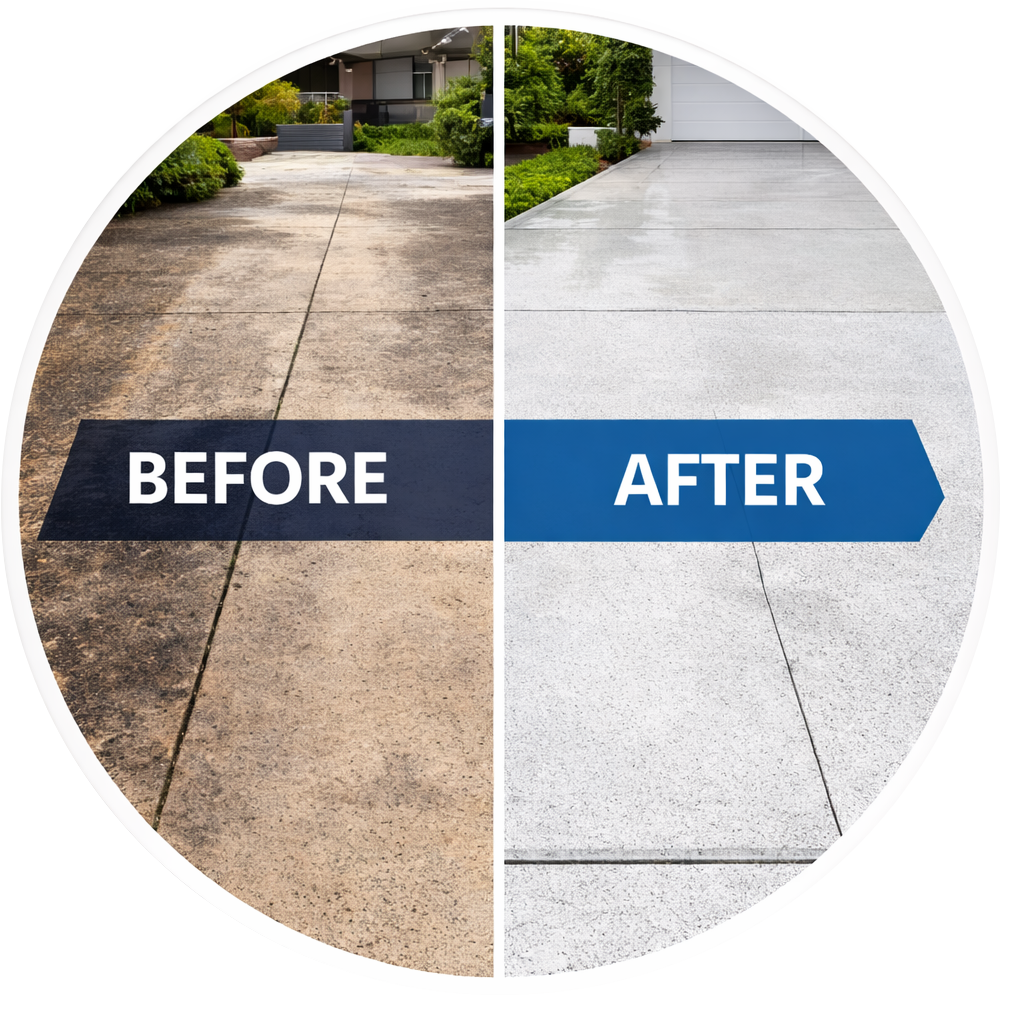
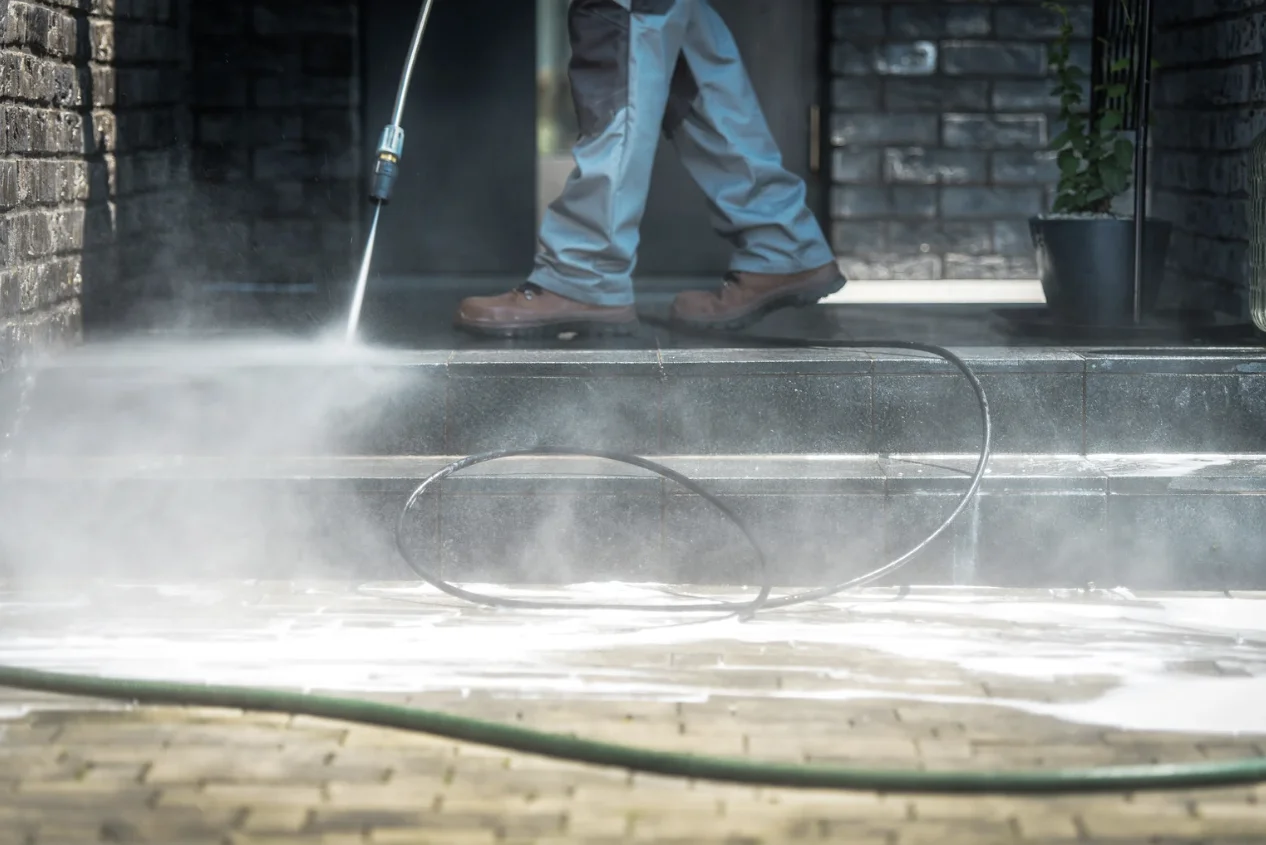
Use even passes instead of holding a narrow jet near one point. Suitable concrete pressure cleaning removes grime and biological film, but excessive force may etch concrete, expose aggregate or strip coatings.
Pavers and porous stone require gentler treatment. Too much pressure can remove jointing material, damage the face of soft stone or leave visible cleaning lines.
5. Rinse, Dry and Test the Surface
Contain the wash water and prevent chemicals, oil, sediment and loosened debris from entering gutters or stormwater drains. Follow product-label instructions and local wastewater requirements, and arrange appropriate collection or disposal where contaminated runoff cannot be safely contained. Allow the driveway to dry completely before inspecting it for contamination, pooling, or visibly smooth finish remnants.
Which Treatment Is Right for Your Driveway?
Useful options for a slippery driveway depend on whether the hazard is surface contamination, trapped water or the finish itself. Cleaning should usually come first because it exposes the condition underneath and prevents coatings from trapping algae, oil or loose material.
Best practice is to begin with the least aggressive effective method. This protects the finish and shows whether a concreter, drainage contractor or coating specialist is also needed.
Fixing Slippery Concrete
Homeowners asking how to fix slippery concrete driveway areas should separate contamination from poor texture. Cleaning may restore sound concrete covered by algae or grime, but a clean surface that remains smooth when wet may need texturing, resurfacing or a suitable exterior coating.
Avoid choosing sealers mainly for gloss. An unsuitable coating may improve colour while reducing traction, particularly on sloped concrete or frequently wet vehicle access areas.
Improving Safety on a Steep Driveway
Steep slippery driveway solutions must control flowing water and surface grip. Clean the full slope, clear drainage, identify unwanted runoff and inspect polished wheel paths or walking areas.
Use this order:
- Clear channels, grates and driveway edges.
- Redirect water entering from roofs or gardens.
- Treat and clean the full slope.
- Inspect the dry surface texture.
- Consider a safer walking route or handrail.
Loose sand can move downhill, clog drains and create uneven traction, so it is not a lasting fix. A coating should also be checked for suitability before it is used on a steep vehicle surface.
Removing Moss and Algae
Slippery moss on driveway surfaces should be treated as biological growth, not simply swept away. Remove debris, apply a compatible product, allow the stated contact time and clean evenly.
The process for removing green algae from concrete shows why treatment and washing work better together than pressure alone. Pay particular attention to shaded edges, sections below trees and areas beside garden beds.
Fresh oil should be absorbed before it spreads, then treated with a suitable degreaser. The advice on removing oil stains from a driveway explains why early treatment improves the result.
How Can You Prevent the Problem from Returning?
Prevention means controlling debris, spills and moisture before a thin film becomes a widespread hazard. Shaded, south-facing or tree-covered areas may need more frequent attention because they dry more slowly than open sections.
- Sweep leaves and soil regularly.
- Absorb oil spills promptly.
- Keep drains, channels and edges open.
- Redirect roof and garden runoff where needed.
- Check coatings for gloss, peeling and uneven wear.
- Arrange maintenance before growth becomes thick.
Inspect the driveway after heavy rain. Puddles, dark, damp areas and overflowing drains can reveal problems that are difficult to see during dry weather.
When Should You Arrange Professional Driveway Cleaning?
Professional driveway cleaning should be considered when the surface is steep, heavily stained, covered in thick moss or algae, sealed, or made from a material that can be easily damaged. It is also the safer option when previous DIY cleaning has left streaks, surface marks or slippery areas that return soon after treatment.
An experienced cleaner can:
- assess the driveway’s material and condition
- select an appropriate treatment
- control the pressure used and protect nearby walls
- gardens, drains and surrounding finishes.
They can also determine whether cleaning alone will resolve the problem or whether poor drainage, damaged concrete or an unsuitable coating requires attention from another qualified specialist.
Professional assessment is particularly important for:
- sandstone
- decorative concrete
- exposed aggregate
- sealed pavers
These surfaces can be damaged by harsh chemicals, excessive pressure or unsuitable equipment, so the cleaning method must be carefully matched to the material and its condition.
Restore Safer Grip Across the Driveway
Understanding how to fix slippery driveway areas means removing contamination and correcting why it developed. Continued slickness after cleaning may indicate drainage failure, worn concrete or an unsuitable coating.
Elite Property Northern Beaches provides driveway, concrete and sandstone cleaning across Sydney. Call 0416 007 745 or email admin@elitepropertynorthernbeaches.com.au to request a quote.