Does efflorescence damage concrete? The white salt deposit is usually cosmetic, but repeated growth can reveal moisture movement that contributes to coating failure, mould, corrosion, surface softening or spalling.
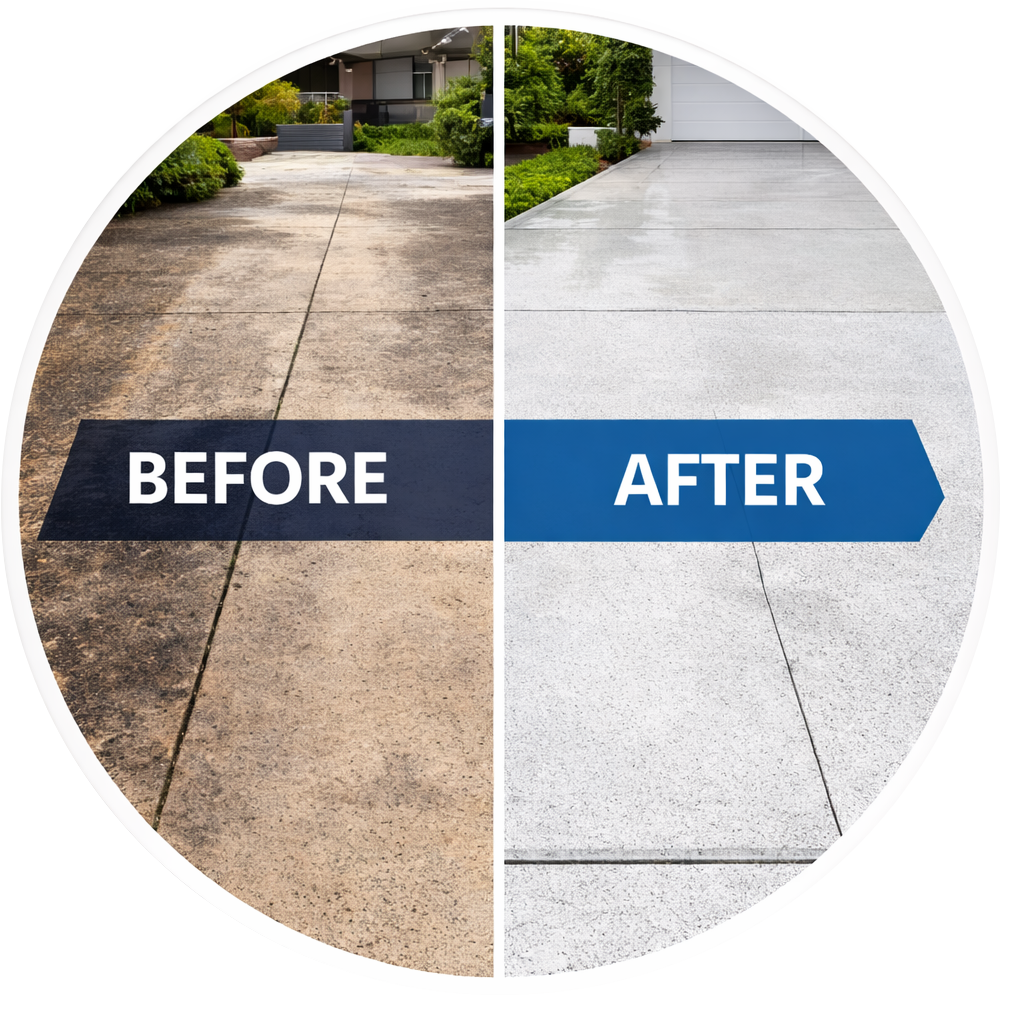
Suitable concrete pressure cleaning can remove visible residue without unnecessarily etching the surface. Lasting treatment also requires the moisture source to be corrected before the concrete is sealed, painted or covered.
Key Takeaways
- Light, isolated deposits are often cosmetic.
- Recurring deposits indicate continued moisture movement.
- Cracks, rust, flaking and exposed steel need further assessment.
- Cleaning does not repair leaks, drainage or waterproofing faults.
- Concrete should be dry and stable before sealing.
Does Efflorescence Damage Concrete or Only Affect Its Appearance?
A light deposit on sound concrete commonly affects appearance only. The greater concern is persistent moisture behind it, which can damage coatings, support organic growth, and, in severe cases, contribute to cement loss or reinforcement corrosion.
When Is It Usually Cosmetic?
A thin, dry deposit that brushes away and does not quickly return is generally a lower-risk issue. The concrete underneath should remain hard, with no damp smell, rust staining, cracking, flaking or exposed reinforcement.
Fresh concrete may also release excess construction moisture while curing. The deposit should reduce once the concrete dries, provided there is no continuing source of water.
Which Warning Signs Need Closer Assessment?
Recurring deposits near wall bases, joints or below ground spaces can indicate active moisture ingress. Dulux Protective Coatings notes that prolonged moisture movement may weaken the cement matrix, reduce protection around reinforcing steel and contribute to spalling in severe cases.
Arrange further assessment when you notice:
- Deposits returning after rain
- Musty odours or visible mould
- Blistering paint or lifting coatings
- Rust staining or exposed steel
- Soft, sandy or crumbling concrete
- Cracks that leak or widen
How Can You Identify the White Deposit?
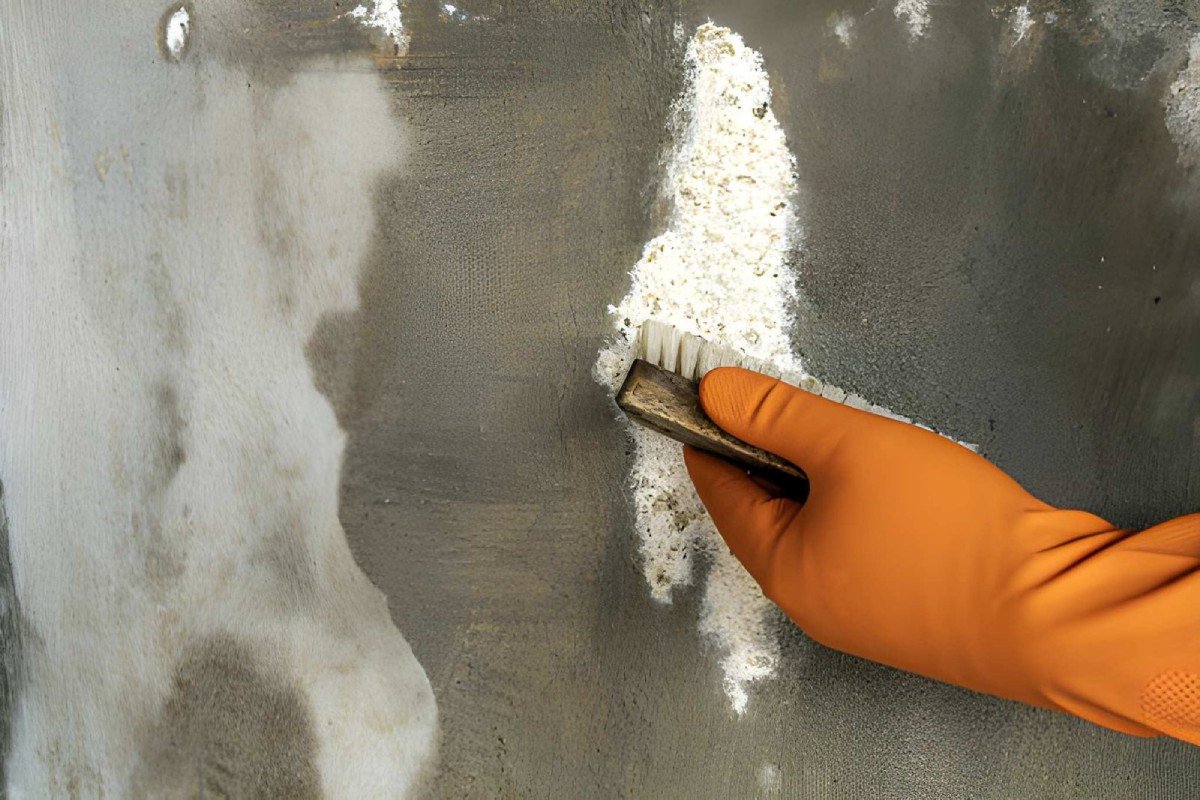
The material usually appears as a white, grey or pale crystalline powder on porous concrete. Correct identification matters because laitance, dust, mould, rust and failed coatings can look similar but need different treatment.
| Surface sign | Likely explanation | Recommended response |
| Dry white powder that brushes away | Mineral salt deposit | Clean and monitor |
| Powder over new concrete | Curing residue or laitance | Check texture and curing history |
| Green or black growth | Moss, mould or algae | Use an organic growth treatment |
| Orange or brown marks | Rust or iron staining | Trace the metal or water source |
| White marks with weak concrete | Possible deterioration | Seek further assessment |
Laitance is weak cement and fine material at the surface, while efflorescence in concrete is made from salts carried by water. If brushing exposes soft material rather than firm concrete, repeated washing may worsen the condition.
What Causes Efflorescence in Concrete?
Three conditions are required: soluble salts, water and a route to the surface. Water enters through pores, cracks, joints or exposed edges, dissolves salts, then leaves crystals behind as it evaporates.
Common moisture sources include:
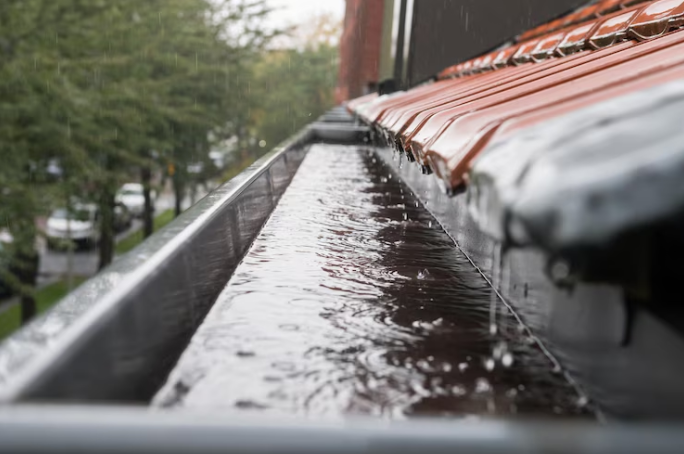
- Overflowing gutters and downpipes
- Garden beds placed against walls
- Irrigation overspray
- Plumbing or drainage leaks
- Failed waterproofing membranes
- Groundwater beneath slabs
- Cracks and unsealed joints
- Poor falls around concrete areas
A Common Household Scenario
A garage wall may develop a white band after heavy rain because a nearby downpipe keeps the surrounding soil wet. Cleaning improves the appearance briefly, but the deposit returns while the wall continues absorbing moisture.
Redirecting the water, improving drainage and allowing the wall to dry provide a more lasting correction than repeatedly cleaning the same area.
How to Fix Efflorescence in Concrete
A lasting response separates surface cleaning from moisture correction. Confirm the residue, trace and reduce the water source, use the least aggressive suitable method, then allow the concrete to dry and remain stable before applying a finish.
- Confirm the material. Check that it is pale, dry and crystalline rather than mould, rust or loose cement.
- Trace the moisture. Inspect gutters, pipes, joints, drains, garden levels and nearby walls.
- Remove loose residue. Begin with a dry nylon brush and vacuum where practical.
- Test the method. Trial the cleaner or water pressure in a hidden area.
- Clean evenly. Avoid concentrating pressure on one spot.
- Correct the cause. Repair leaks, improve drainage or obtain waterproofing advice.
- Dry and monitor. Check for recurrence before sealing, painting or covering the surface.
For large patios and driveways, controlled driveway pressure cleaning can create a more even result than a narrow spray wand. Following safe methods for cleaning a concrete driveway without damage also helps prevent striping, etching and unevenly exposed aggregate.
Removing Efflorescence From Concrete Safely
Start with dry cleaning because water can dissolve salts and redeposit them in the concrete pores. A nylon brush is generally safer than aggressive metal brushing on coloured, sealed, decorative or older concrete.
For stubborn residue, use a purpose-made product suited to the surface finish. Test a hidden area first, protect nearby glass, paint, metal and plants, follow the label instructions and never mix cleaning chemicals.
How to Treat Efflorescence in Concrete Before Sealing
Remove the salts, correct the moisture source and allow the slab to dry before applying any finish. Protective coating guidance warns that powdery deposits create a poor base for adhesion, and active moisture may cause blistering beneath coatings.
Dulux uses a moisture reading below 10 percent as its coating readiness guide in its technical note. Suitable concrete sealing may reduce future absorption once the surface is sound, but it cannot replace drainage, plumbing or waterproofing repairs.
How to Stop Efflorescence on Concrete Floor
Indoor deposits may come from moisture beneath the slab, a leaking pipe, failed waterproofing, wet soil beside a wall or water entering through a construction joint. The water path should be traced before the floor is covered.
Follow this process:
- Map where the deposit begins and ends.
- Compare it with walls, pipes, joints and outdoor ground levels.
- Check whether it worsens after rain or plumbing use.
- Correct the likely water source.
- Clean, dry and monitor the slab.
- Apply flooring only after suitable moisture checks.
Do not hide efflorescence on concrete floor beneath tiles, epoxy, carpet or paint. Trapped moisture may interfere with adhesives, create odours and cause finishes to blister or lift.
Which Cleaning Method Is Most Suitable?
The right option depends on deposit thickness, concrete strength, age, finish and whether moisture is still entering. Begin with the mildest effective method, then increase treatment only after testing.
| Method | Best use | Main advantage | Main limitation |
| Dry nylon brushing | Fresh, loose powder | Adds no water | Limited to hard crusts |
| Low-pressure rinsing | Light outdoor residue | Simple and even | Reintroduces moisture |
| Controlled pressure cleaning | Large, sound surfaces | Efficient coverage | May etch weak concrete |
| Purpose-made salt cleaner | Stubborn deposits | Targets mineral residue | Requires careful testing |
| Sealing after drying | Stable, suitable concrete | Reduces absorption | Can fail over active moisture |
Other discolouration requires separate treatment. Use suitable methods for moss on concrete and rust stains in concrete rather than treating every mark as salt residue.
When Should You Call a Cleaner or Building Specialist?
A cleaning service is suitable when the concrete is stable, and the main task is removing confirmed residue evenly. A plumber, drainage contractor, waterproofer or building specialist may also be required when the source extends beyond surface contamination.
Seek further advice when:
- Water enters an internal room
- Deposits return soon after cleaning
- Concrete is soft, cracked or spalling
- Rust appears around reinforcing steel
- Paint or flooring repeatedly lifts
- The moisture source cannot be found
Address the Moisture Before the Deposit Returns
Homeowners often ask, does efflorescence damage concrete, and the answer depends largely on whether moisture continues moving through the surface. Recurring salt deposits should be treated as evidence of an underlying water source rather than only a cosmetic problem.
Elite Property Northern Beaches assesses the finish, residue, access and surrounding drainage before selecting a suitable cleaning method. Call 0416 007 745 or email admin@elitepropertynorthernbeaches.com.au to request a quote across Sydney and the Northern Beaches.