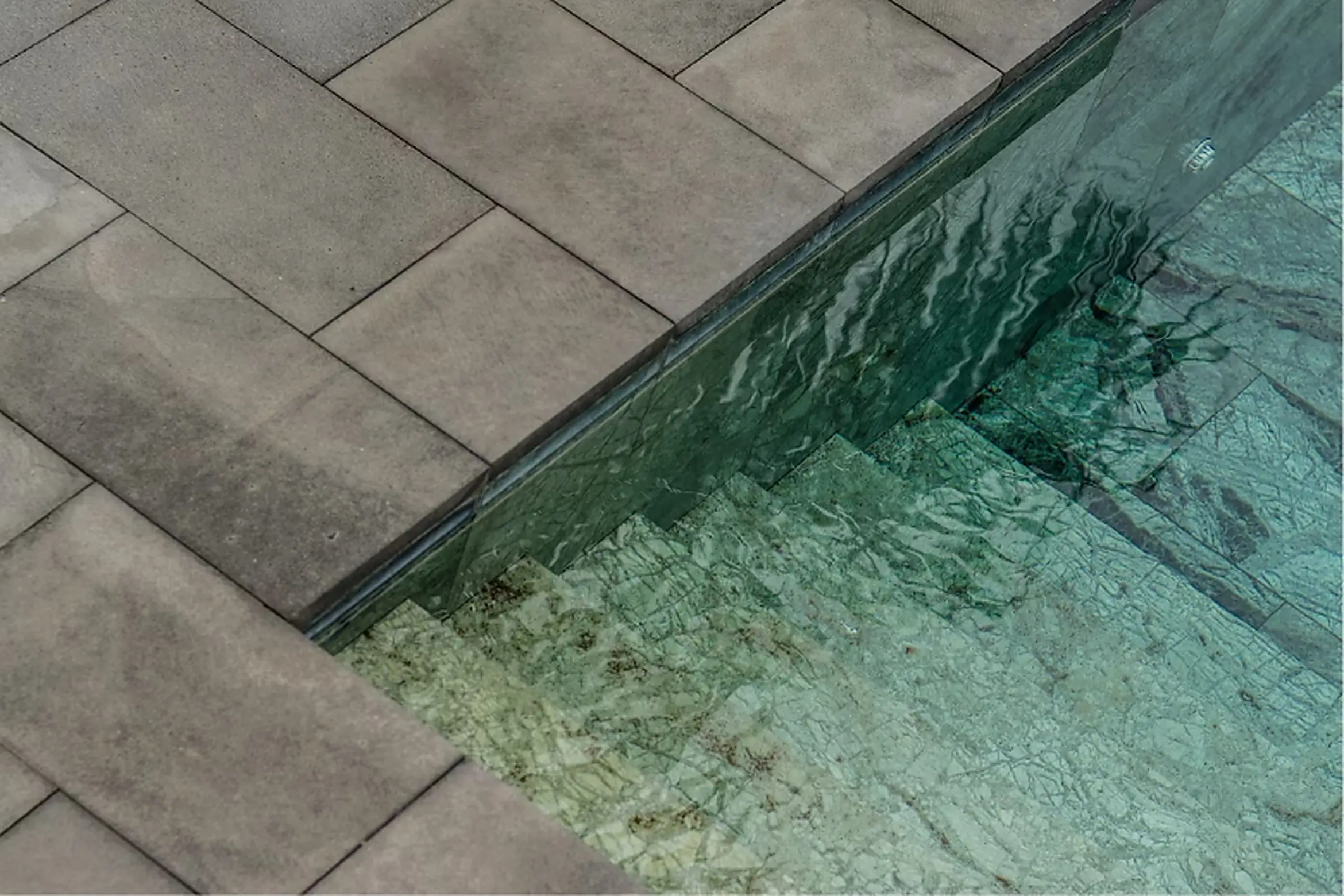
Green algae on pool walls usually develops when sanitiser is ineffective, circulation or filtration is inadequate, and warm conditions or organic debris allow growth to establish. Understanding what causes green algae on pool walls helps homeowners correct the underlying water conditions instead of repeatedly brushing away the same green patches.
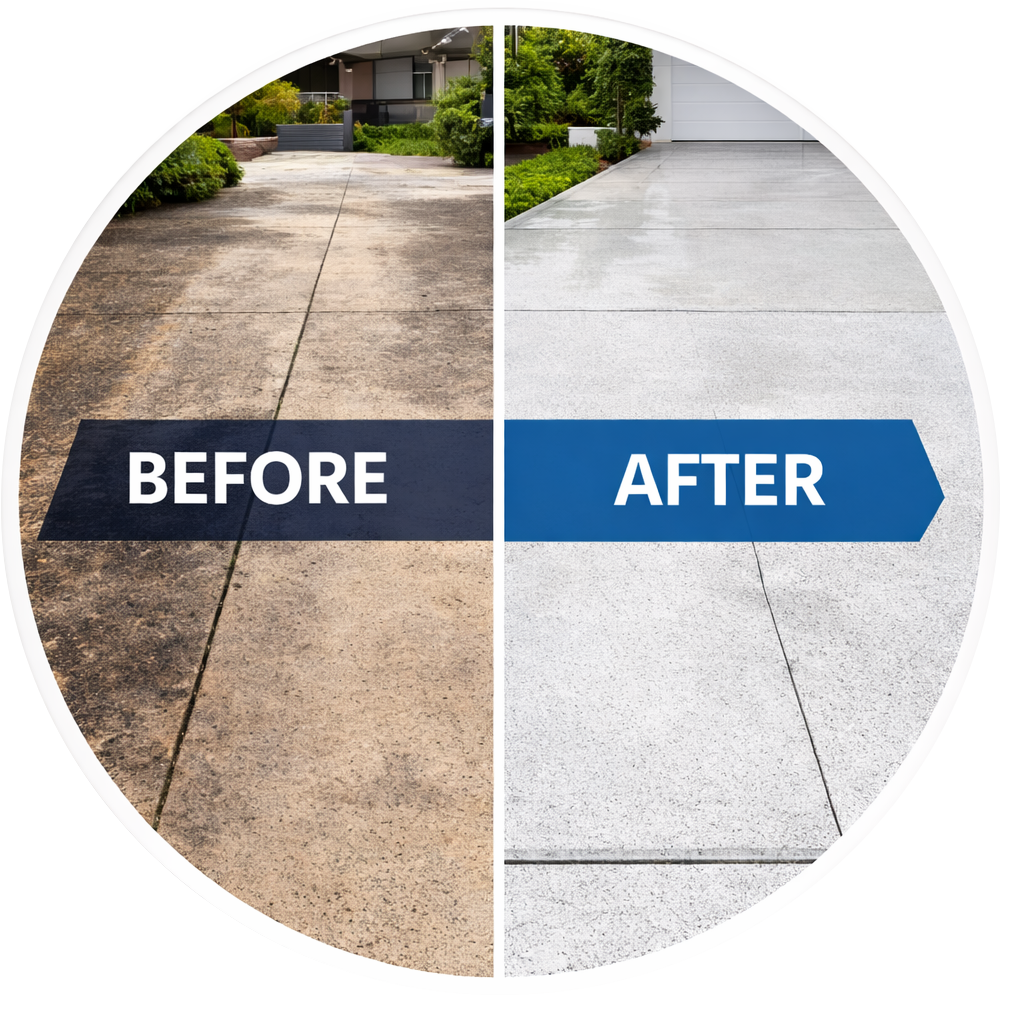
Algae inside a swimming pool requires water testing and pool maintenance, while growth on surrounding concrete, pavers, or coping needs a different approach. For suitable exterior surfaces, concrete pool surround cleaning can remove buildup after the material, drainage, and condition have been assessed.
Key Takeaways
- Low or ineffective sanitiser is a major condition that allows green algae to develop.
- Poor circulation and filtration can create areas where algae establishes and returns.
- Warm weather, rain, leaves, soil, and heavy pool use can increase treatment demand.
- Test the water before adding chemicals so the underlying cause is not masked.
- Treat algae inside the pool separately from growth on surrounding concrete or pavers.
What Causes Green Spot Algae on Pool Walls?
Several conditions explain what causes green algae to establish on pool surfaces. Low effective chlorine, poor circulation, inadequate filtration, warm weather, organic contamination, and missed brushing can all contribute. Several of these conditions can occur at the same time.
Low or Ineffective Sanitiser
Chlorine helps control algae, but its effectiveness can be reduced by factors such as pH, stabiliser levels, sunlight, temperature, rainfall, and contamination. When sanitiser is not working effectively, algae can establish more easily on pool walls, steps, and other surfaces.
Poor Circulation Around Walls and Steps
Corners, steps, ladders, fittings, and areas furthest from return jets may receive less water movement. Growth that repeatedly appears in one location can indicate a circulation blind spot rather than a problem affecting the whole pool equally.
Inadequate Filtration
Filtration removes dirt, debris, and suspended material. A dirty filter, weak flow, unsuitable operating time, or equipment fault can leave more contamination in the pool and make algae harder to control.
Warm Weather and Organic Contamination
Warm, sunny conditions favour rapid algae growth. HealthyWA advises that algae can turn pool water green within a few hours under favourable conditions. Leaves, soil, sunscreen, and heavy swimmer use can also increase sanitiser demand.
How Can You Tell if Green Marks Are Algae?
Green algae often appears as dull green or yellow-green patches that feel slippery and can usually be disturbed by brushing. Fixed discolouration may instead be staining or another surface issue, so identify the mark before using stronger treatment.
Use four checks:
- Check the texture. See whether the area feels slippery or soft.
- Brush a small section. Use a tool suitable for the pool finish.
- Watch where it returns. Repeated growth in one area may indicate weak circulation.
- Test the water. Check the relevant readings before choosing a treatment.
Why Can Pool Water Turn Green?
Green water usually develops when algae is no longer controlled effectively across the pool. The same conditions that allow wall growth can cause widespread discolouration, including inadequate sanitiser, weak circulation, poor filtration, warm water, and organic contamination.
Understanding what causes green algae in pool water starts with looking at the pattern rather than colour alone.
| Pool condition | What it may indicate | Useful next check |
| Green patch on one wall | Local circulation issue | Check return flow |
| Cloudy green water | Widespread algae or filtration issue | Test chemistry and filtration |
| Green water after rain | Changed balance or added debris | Remove debris and retest |
| Growth around steps | Sheltered water movement | Brush and review circulation |
| Mark that will not brush away | Possible staining | Ask a pool technician |
What Changes After Heavy Rain or Busy Pool Use?
Heavy rain can alter pH, dilute treatment levels, and wash debris into the pool. Heavy swimmer use also increases sanitiser demand, so retesting may be needed after unusually busy periods or significant rainfall.
For homeowners asking what causes green algae in a pool after a storm, testing is more useful than automatically adding more chlorine.
How Do You Remove Green Algae From Pool Walls?
Once you understand what causes green algae on pool walls, removal should address the visible growth and the conditions supporting it. Treatment depends on the pool finish, water chemistry, equipment, and products used, so follow system and chemical instructions rather than relying on a generic dose.
- Test the water. Record free chlorine, pH, and other readings required for the pool system.
- Remove loose debris. Clear leaves, soil, and other organic material.
- Correct the water balance. Adjust chemistry according to test results and product instructions.
- Brush affected surfaces. Use a brush approved for the pool finish, including around steps and corners.
- Operate the system correctly. Follow equipment and treatment instructions for circulation and filtration.
- Remove settled algae. HealthyWA recommends vacuuming settled algae rather than relying on the filter alone.
- Retest before swimming. Confirm that the water has returned to suitable operating conditions.
Best practice: Test first and treat second. Adding chemicals without checking the water can mask the cause and create another water balance problem.
Why Does Green Algae Keep Coming Back and How Can You Prevent It?
Recurring algae usually means the visible growth was removed without fully correcting the conditions that supported it. Knowing what causes green algae on pool walls makes prevention more targeted because homeowners can monitor chemistry, circulation, filtration, debris, and recurring low-flow areas instead of repeatedly treating the same symptom.
A practical prevention routine includes:
- Keep sanitiser and pH within the recommended operating range.
- Maintain filters, skimmer baskets, and circulation.
- Brush walls, steps, corners, and fittings.
- Remove leaves, soil, and other organic debris promptly.
- Retest after significant rain or heavy pool use.
- Review return flow where growth repeatedly appears.
For example, algae returning on one shaded wall beside the steps may point to a local circulation issue. Treating the whole pool without checking water movement may provide only temporary improvement.
Treat the Cause Before the Green Colour Returns
Understanding what causes green algae on pool walls helps you address the underlying issue, whether it involves sanitiser, circulation, filtration, contamination, or maintenance. Correcting the cause is more effective than repeatedly treating visible growth.
Exterior algae requires a different approach. Elite Property Northern Beaches can assess suitable pool surrounds and recommend an appropriate cleaning method. Call 0416 007 745 or email admin@elitepropertynorthernbeaches.com.au to discuss your poolside cleaning needs.