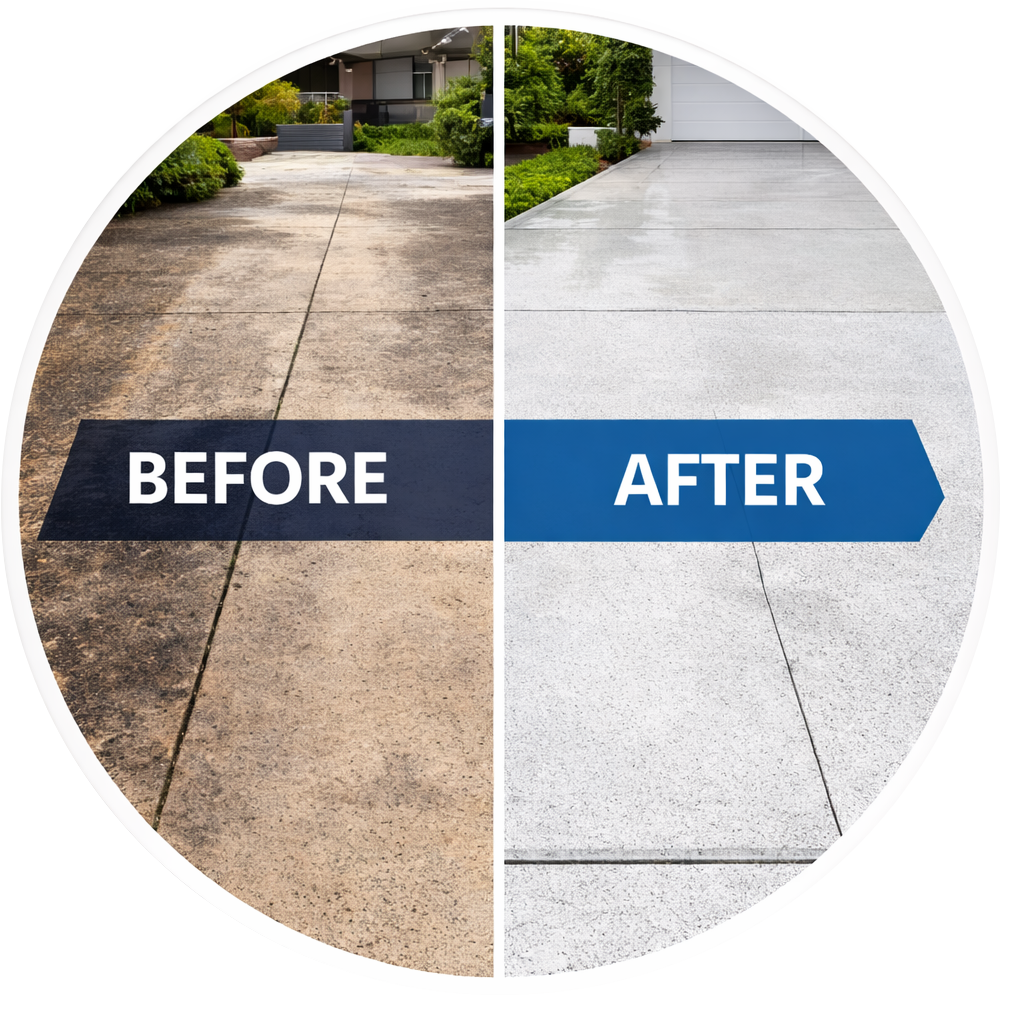
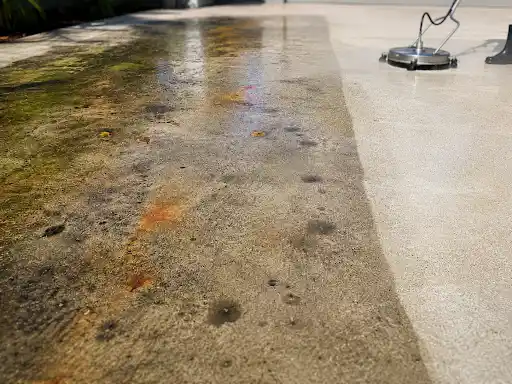
If you are wondering how to fix concrete discolouration, first identify whether the colour change comes from leaves, rust, oil, moss, algae, moisture, worn sealer, or curing variation. Many outdoor stains can be improved with concrete pressure cleaning, spot treatment, controlled rinsing, and sealing when suitable.
Concrete discolouration can make driveways, paths, patios, and pool surrounds look worn even when the slab is sound. The right method improves appearance and helps protect nearby finishes.
Key Takeaways
- Identify the stain before using chemicals or pressure.
- Use mild cleaning first, then move to targeted treatment.
- Treat rust, oil, leaves, moss, and sealer wear differently.
- Avoid narrow pressure jets that leave lines or etched marks.
- Seal suitable concrete after cleaning to reduce future staining.
What are the Main Concrete Discoloration causes?
Concrete can change colour because it is porous and exposed to moisture, minerals, organic matter, vehicle residue, and cleaning products. Some marks sit on the surface, while others soak into the pores or come from the way the slab cured.
Common causes include wet leaves, metal rust, fertiliser marks, oil spills, tyre rubber, algae, moss, salt residue, poor drainage, and uneven sealer wear. Older concrete may also show colour variation from curing conditions, overworking, or chemical etching.
The stain pattern helps. Orange marks often point to rust, brown marks to leaves or soil, black spots to mould or oil, and white powder to efflorescence.
Why Does Concrete Driveway Discolouration Happen So Often?
Driveways stain faster because they handle vehicle traffic, tyres, oil drips, rain runoff, soil, leaves, and foot traffic. On shaded or coastal properties, moisture and salt air can make stains more visible.
In Northern Beaches suburbs, a driveway near garden beds may show brown leaf stains along the edges, while the garage entry may show dark tyre marks and oil patches. Tyre-related staining often needs degreasing and controlled washing because rubber residue can bond to the concrete surface rather than rinse away with water alone.
Step-by-Step Guide on How to Fix Concrete Discolouration
The safest way to learn how to fix concrete discolouration is to start gently and increase treatment only when needed. This reduces streaking, bleaching, etched lines, lawn damage, and harm to nearby painted surfaces.
- Inspect the stain
Check the colour, pattern, location, and likely source. Look for nearby leaves, metal furniture, oil spots, garden runoff, sealed areas, or dam patches. - Sweep and prepare the area
Remove loose leaves, soil, mulch, stones, and furniture. This stops debris from spreading during cleaning. - Wash with a mild cleaner
Apply a concrete-safe cleaner or mild detergent, allow dwell time, scrub with a stiff outdoor brush, and rinse evenly. - Treat the specific stain
Use degreaser for oil, rust remover for orange marks, organic growth treatment for moss or algae, and repeated mild cleaning for leaf tannins. - Rinse with controlled pressure
Use even passes and a suitable spray pattern. Avoid holding a narrow jet close to the slab because it can cut visible lines into concrete. - Let the surface dry before judging
Concrete often looks darker while wet. Recheck after drying before choosing treatment, sealing, or specialist help. - Seal suitable concrete
After proper cleaning and drying, sealing can help reduce water absorption, oil penetration, leaf staining, and patchy wear.
Which Cleaning Method Works Best for Concrete Discolouration?
The best method depends on whether the mark is organic, oily, mineral, chemical, or linked to an old sealer.
| Stain or colour issue | Likely cause | Best first treatment | What to avoid |
| Green or black patches | Moss, algae, mould | Pre-treatment and controlled rinse | Pressure only without treatment |
| Orange marks | Rust, fertiliser, and metal runoff | Concrete-safe rust remover | Bleach is the main fix |
| Dark oily areas | Oil, grease, vehicle residue | Degreaser and scrubbing | Sealing before cleaning |
| Brown stains | Leaves, tannins, soil runoff | Mild cleaner and repeat wash | Strong acid without testing |
| White powder | Efflorescence, moisture movement | Dry brushing and mild washing | Sealing while damp |
| Patchy shine | Worn or uneven sealer | Surface clean and assess | Adding sealer over dirt |
If you notice concrete discolouration, brown marks after wet leaves or garden runoff, clean them early before tannins soak deeper. For orange staining, how to remove rust stains from concrete covers, and why rust needs a targeted product rather than general washing.
When Does Concrete Discolouration Repair Need a Specialist?
Specialist help is useful when stains are deep, widespread, recurring, close to delicate finishes, or made worse by DIY cleaning. It also helps around sealed concrete, painted edges, glass, sandstone, garden beds, drains, or slopes.
The expert best practice is to test any chemical or pressure setting in a hidden area first. This shows whether the surface will lighten, streak, react with old sealer, or absorb treatment unevenly.
Cleaning will not always restore concrete to a new-slab colour. If the discolouration in concrete comes from curing variation, deep oil, chemical burns, old sealer failure, or surface wear, the practical fix may include resealing, resurfacing advice, or accepting natural variation.
How Can You Prevent Concrete Discolouration from Returning?
Prevention comes down to reducing moisture, cleaning stains early, and protecting suitable concrete after cleaning. Regular maintenance matters for shaded paths, coastal homes, garden-edge driveways, and areas with poor airflow.
Practical prevention steps include:
- Sweep wet leaves before tannins soak in.
- Clean oil, grease, and tyre marks early.
- Trim plants to improve sunlight and airflow.
- Redirect water that pools on concrete.
- Rinse salt, soil, and fertiliser residue after storms.
- Book driveway pressure cleaning before stains become embedded.
- Seal suitable concrete only after it is clean and dry.
For moss-prone surfaces, how to remove moss from concrete explains why treating growth at the source is better than blasting the top layer away.
Restore a Cleaner, Safer and More Even Concrete Finish
Knowing how to fix concrete discolouration means finding the cause first, then choosing the safest cleaning method. Rust, oil, leaf tannins, moss, algae, sealer wear, and moisture marks all need different treatment.
Elite Property Northern Beaches helps homeowners, strata properties, schools, offices, shops, and commercial sites restore stained concrete with careful pressure washing, soft washing, concrete cleaning, driveway cleaning, mould and moss removal, and cleaning and sealing. If your concrete looks blotchy, slippery, brown, stained, or weathered, call 0416 007 745 or email admin@elitepropertynorthernbeaches.com.au for a free quote.