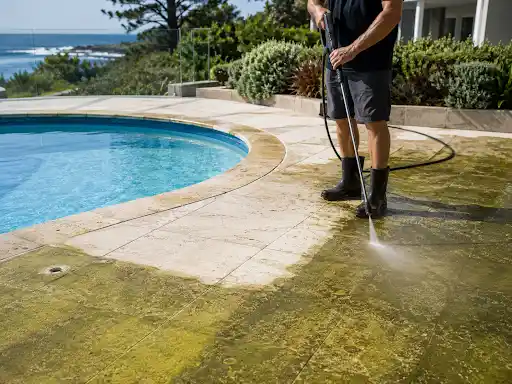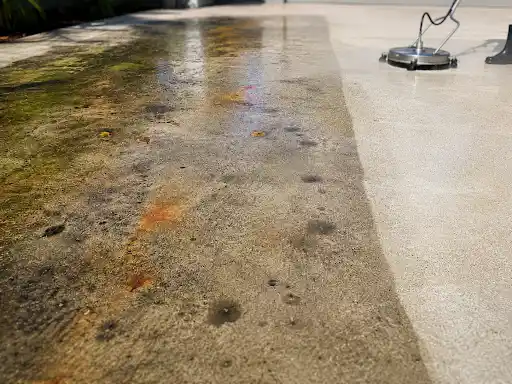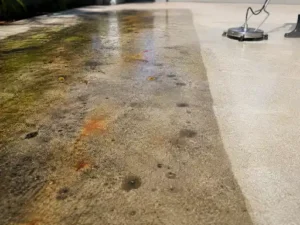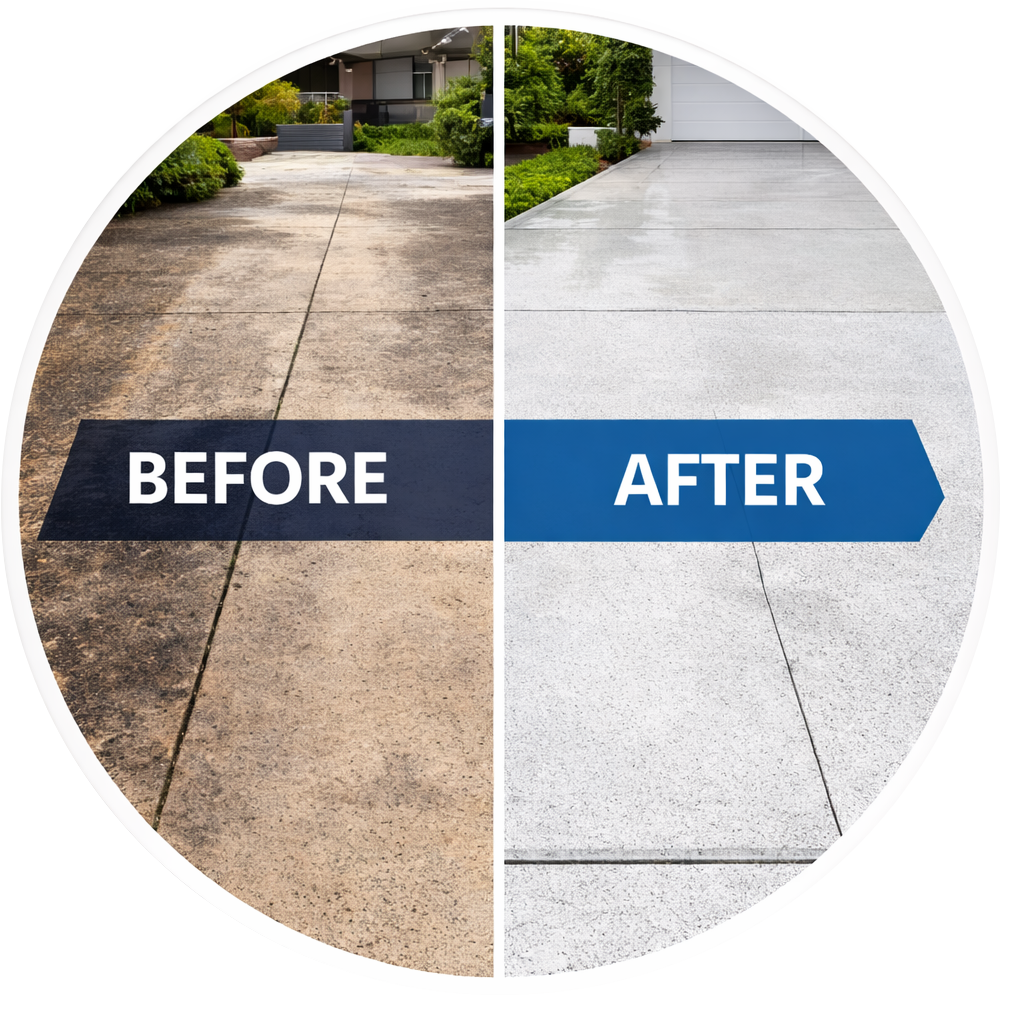
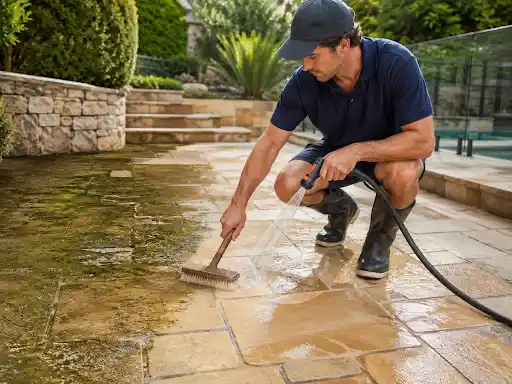
To answer how to clean sandstone, remove loose debris, wet the stone first, apply a pH-neutral or stone-safe cleaner, scrub gently, and rinse with controlled water pressure. Avoid acid, wire brushes, harsh degreasers, bleach mixes, and narrow pressure jets because sandstone can mark, soften, or erode.
For stained, slippery, mould-affected, or weathered outdoor areas, sandstone cleaning helps restore the surface with a method suited to the stone. Northern Beaches sandstone often sits near shade, salt air, pools, moss, algae, and damp garden edges.
Key Takeaways
- Use a pH-neutral or stone-safe cleaner for general washing.
- Test any cleaner on a hidden area before treating the full surface.
- Treat mould, moss, algae, rust, oil, and leaf stains differently.
- Use a soft-bristle brush instead of wire brushes or metal scrapers.
- Consider sealing once the sandstone is clean, dry, and suitable.
Why Sandstone Needs Gentle Cleaning
Sandstone is porous, layered, and softer than many outdoor hard surfaces. Salt, soil, leaves, fertiliser, pool splash, and organic growth can soak into the pores, so aggressive cleaning can damage the surface before removing the stain.
Concrete-style pressure cleaning can be too harsh. A narrow jet can leave lines, loosen joint sand, expose weak edges, or make old pavers uneven.
How To Clean Sandstone Safely Without Surface Marks
The safest process begins with inspection, product choice, and pressure control. If you are asking how do you clean sandstone without damage, loosen the grime first, then rinse gently instead of blasting the surface.
Check for soft stone, loose grout, flaking edges, old sealer, rust, oil, and dark organic staining. Wet the sandstone first, keep treated areas damp during dwell time, and rinse before residue dries.
What To Use To Clean Sandstone Without Damage
For general dirt, use clean water, a pH-neutral detergent, a natural stone cleaner, and a soft-bristle brush. For organic growth, use a stone-safe mould, moss, or algae treatment.
Avoid vinegar, lemon juice, hydrochloric acid, harsh alkaline degreasers, bleach mixes, steel wool, and random chemical combinations. These can affect colour, damage plants or metal fixtures, and leave residue. Natural stone care guidance commonly recommends neutral cleaners, mild detergents, and thorough rinsing.
| Surface issue | Safer first option | Extra care |
| Dust and soil | Water and pH-neutral detergent | Rinse before residue dries |
| Green algae | Stone safe algae treatment | Protect plants and pool water |
| Black mould | Exterior stone mould treatment | Allow dwell time before rinsing |
| Rust marks | Stone safe rust remover | Test in a hidden area |
| Oil stains | Stone safe degreaser | Blot fresh oil before washing |
Step By Step: How To Clean Sandstone Pavers
Outdoor pavers collect foot traffic, leaf stains, soil, and water. Work in small sections, treat the cause of staining, and rinse evenly across the full area.
- Move pots, furniture, mats, and loose items away.
- Sweep leaves, dirt, bark, and grit from the surface and joints.
- Wet the sandstone with clean water.
- Apply a pH-neutral or stone-safe cleaner in small sections.
- Allow dwell time, but do not let the cleaner dry.
- Scrub lightly with a soft-bristle brush.
- Rinse with a hose, wide fan spray, or controlled rinse.
- Let the pavers dry before checking remaining marks.
Pool surrounds often turn green near fences, shaded corners, and garden beds. Treat those sections first, then rinse the full surface evenly.
How To Clean Mould Off Sandstone Pavers Safely
Mould should be treated before rinsing because scrubbing alone can leave dark staining behind. Use a stone safe exterior mould treatment, allow dwell time, lightly agitate, and rinse thoroughly.
Black mould is common on shaded steps, side paths, walls, pool surrounds, and damp garden edges. Older mould may need a second treatment. Nearby painted wall mould also needs lower pressure and surface suitable treatment.
How To Clean Moss Off Sandstone Without Scraping the Stone
Moss grows where shade, trapped moisture, and organic debris sit for long periods. Lift thick growth gently, apply a suitable treatment, let it loosen, then rinse with controlled water.
Do not gouge moss with metal scrapers because sandstone edges can chip or scratch. Moss is also a slip concern on steps and pool surrounds. Good moss prevention also depends on drainage, airflow, shade control, and regular sweeping.
Which Cleaning Method Is Safest for Sandstone?
The safest method depends on stone condition, stain type, drainage, access, nearby plants, and surrounding finishes. Light areas may need hand washing, while heavy growth may need soft washing, controlled rinsing, and later sealing.
| Method | Best for | Main benefit | Main risk |
| Hand washing | Small, lightly marked areas | Gentle and low risk | Slow for large areas |
| Soft washing | Mould, moss, and algae | Treats growth before rinsing | Needs correct dilution |
| Controlled pressure rinsing | Durable flat areas | Faster, even rinsing | Can mark soft stone if misused |
| Sealing | Clean porous sandstone | Helps slow staining | Traps marks if done too early |
If the stone feels sandy, flaky, or has old sealer patches, assess it before using equipment.
When To Book Sandstone Cleaning or Sealing
DIY is usually fine for light dust, fresh leaves, and small marks. It becomes riskier when sandstone is slippery, soft, heavily stained, close to a pool, or pressure-damaged.
Large patios, paths, walls, steps, entries, and pre-sale areas need a safe, controlled approach. After cleaning, cleaning and sealing may help suitable sandstone resist water absorption, leaf stains, salt residue, and organic regrowth. Sealing should only happen once the stone is clean and dry.
How To Keep Sandstone Cleaner for Longer
Prevention reduces deep staining and makes future cleaning easier. Knowing how to clean sandstone also means managing shade, drainage, leaves, damp pots, and pool splash.
Use these habits every few weeks:
- Sweep shaded paths, steps, and paver joints.
- Move pot plants so damp rings do not form.
- Rinse salt, sunscreen residue, and pool splash before they dry.
- Trim plants that keep sandstone wet after rain.
- Treat green patches early before they spread.
- Check drainage near garden beds, walls, and pool surrounds.
Protect Your Sandstone With the Right Cleaning Method
Good results come from the right balance of cleaner, dwell time, brushing, rinsing, and surface protection. Harsh acids, metal tools, and uncontrolled pressure can cause permanent damage, especially on old, soft, or weathered sandstone.
Elite Property Northern Beaches provides sandstone cleaning, soft washing, pressure washing, mould and moss removal, surface cleaning, and cleaning and sealing across Sydney and the Northern Beaches. If your sandstone pavers, paths, walls, steps, or pool surrounds are stained, slippery, weathered, or difficult to clean safely, the team can choose a service suited to the surface and restore a cleaner, safer finish. Call 0416 007 745 or email admin@elitepropertynorthernbeaches.com.au to request a free quote.